eCommerce SMS Marketing: Strategies, Examples, and Best PracticesView as Markdown
Learn how eCommerce SMS marketing helps brands reach opted-in customers with timely promotions, order updates, cart reminders, and personalized messages.
- SMS gives eCommerce brands a direct way to deliver promotions, order updates, reminders, and service messages to opted-in customers.
- Effective programs combine promotional campaigns with transactional and operational messages, including shipping alerts, purchase confirmations, and cart recovery texts.
- Segmentation and personalization help align each campaign with customer behavior, product interests, purchase history, and loyalty status.
- A compliant subscriber list depends on clear consent, accurate expectations, and a simple opt-out process.
- Delivery rate, opt-out rate, click-through rate, reply rate, conversion rate, and revenue per message help you evaluate performance and improve future campaigns.
Why SMS Marketing Works for eCommerce
SMS gives you a direct way to reach opted-in customers with information they can act on quickly. Its value comes from a combination of visibility, timing, and relevance.
- Direct delivery: Messages reach customers on their phones without depending on inbox placement, app usage, or social media algorithms.
- Fast engagement: Eighty-seven percent of consumers read business texts within 15 minutes, making SMS effective for back-in-stock alerts, delivery updates, and limited-time promotions.
- Revenue potential: Active SMS programs can contribute 15% to 25% of total revenue for specialty retail businesses using EZ Texting
- Stronger purchase intent: Customers who engage in SMS support conversations are 30% to 50% more likely to make a purchase than those who do not.
- Useful customer communication: The strongest messages provide a clear benefit, timely update, or relevant next step rather than adding unnecessary volume.
How SMS Compares to Email and Social
SMS works best as part of a broader channel strategy. Email, social media, and text messaging each support different customer moments, so the goal is to use each one where it has the clearest advantage.
| Channel | Best for | Main advantage | Main limitation |
|---|---|---|---|
| SMS | Reminders, alerts, short offers, and time-sensitive updates | Reaches opted-in contacts directly and is often read quickly | Limited space and formatting capabilities |
| Detailed information, newsletters, and multi-link content | Supports detailed content, visuals, and multiple links | Messages may not be seen immediately or may be redirected to spam folders | |
| Social media | Discovery, public engagement, and audience growth | Helps expand reach and maintain visibility with followers | Reach depends on algorithms and platform policies |
A common approach is to use email for depth, social media for discovery, and SMS for concise communication that guides the customer toward one clear next step. Email and SMS are also considered owned channels, because your business manages those subscriber lists directly.
The Case for Owned Channels
Email and SMS give you a direct line to people who have chosen to hear from your business. You still need to follow consent rules and carrier requirements, but you are not relying on an algorithm or paying for every new impression just to reach the same audience over and over again. Purchase history, clicks, and replies can help you understand what subscribers are interested in, how often they engage, and which types of messages are most likely to prompt action. As that data builds, your subscriber list becomes more valuable.
Owned channels can also make campaign planning more predictable. Paid media costs may rise as competition changes, while SMS costs are generally tied to message volume and format. You can compare that spend directly with purchases, recovered carts, and repeat revenue.
Core Types of eCommerce SMS Campaigns
Most SMS eCommerce messages fall into two broad categories:
- Promotional messages: Campaigns your business initiates to encourage interest or action, such as flash sales, product launches, loyalty offers, or back-in-stock alerts.
- Transactional messages: Updates triggered by a customer action or account event, such as an order confirmation, shipping notice, delivery alert, or subscription reminder.
A strong SMS program usually includes both. Promotional campaigns support revenue, while transactional messages improve the purchase experience and keep customers informed.
Promotional and Sales Campaigns
Promotional SMS campaigns can support flash sales, limited-time offers, product launches, loyalty rewards, seasonal promotions, back-in-stock alerts, and reengagement efforts for customers who have not purchased recently.
Clear deadlines give customers a reason to act while the offer is still available. VIP campaigns can take a different approach by rewarding loyal customers with early access, subscriber-only pricing, or offers based on previous purchases.
For example:
- “[Brand]: {Product name} is back in stock. Order before it sells out again: {link}”
- “[Brand]: Get {offer} on your next order through {deadline}. Shop now: {link}”
MMS can be especially useful when the product itself helps sell the offer. A clear image can highlight a new release, show a color option, or make a seasonal campaign easier to recognize. Transactional messages represent 42.3% of SMS volume for retail and apparel businesses using EZ Texting, a rate five times higher than the platform average. In addition, 64% of consumers say they are more likely to click or purchase when a promotional text includes an image.
Keep the visual secondary to the message. Customers should still be able to identify the product, understand the offer, and find the next step without working through extra detail.
Transactional and Operational Messages
Transactional messages are tied to a specific customer transaction or account event, such as an order confirmation, payment notice, shipping update, or renewal reminder. Retail businesses using EZ Texting send MMS for nearly 31% of their messages, approximately 1.5 times the platform average.
Operational messages cover broader service or fulfillment updates, including delivery disruptions, pickup changes, store closures, or system outages that may affect the customer experience. Delivery notification texts have helped logistics businesses using EZ Texting reduce inbound support contacts by 40% to 60% while improving customer satisfaction scores by 12 to 18 points.
A transactional message might look like this:
- “[Brand]: Order {order number} has shipped. Track it here: {tracking link}”
An operational message could look like this:
- “[Brand]: Severe weather may delay deliveries in {region}. Check your latest order status here: {link}”
Customers typically expect these kinds of messages. A well-timed update can confirm that an order was received, explain where it is in the fulfillment process, and reduce the need for the customer to contact support.
Recovering Abandoned Carts
Cart abandonment affects roughly 70% of online shopping carts. The customer has already shown clear interest, so the goal is to make returning to checkout easy without being obtrusive.
To accomplish this:
- Send the first reminder about 30 to 60 minutes after abandonment, using a direct link that restores the cart.
- Follow up with a second message about 24 hours later and consider including a modest incentive, such as free shipping or a limited discount.
- (Optional) Send a third reminder only when inventory, an offer deadline, or some other element makes timing relevant.
Avoid leading every recovery sequence with a discount. If incentives appear too quickly, customers may learn to abandon checkout on purpose. Reserve the offer for later in the sequence or for segments that need additional encouragement.
Building Your SMS Subscriber List
Every campaign begins with permission. In the United States, the Telephone Consumer Protection Act requires appropriate prior consent for marketing texts. Canada’s Anti-Spam Legislation also establishes consent and identification requirements for commercial electronic messages.
Consent language should explain that the customer is signing up to receive text messages from your business. It should also disclose expected frequency, provide access to applicable terms, and explain how to stop future messages. Because requirements vary by jurisdiction and campaign type, legal counsel can help you review your specific enrollment process.
Opt-In Methods for eCommerce
You can collect SMS subscribers through several customer touchpoints:
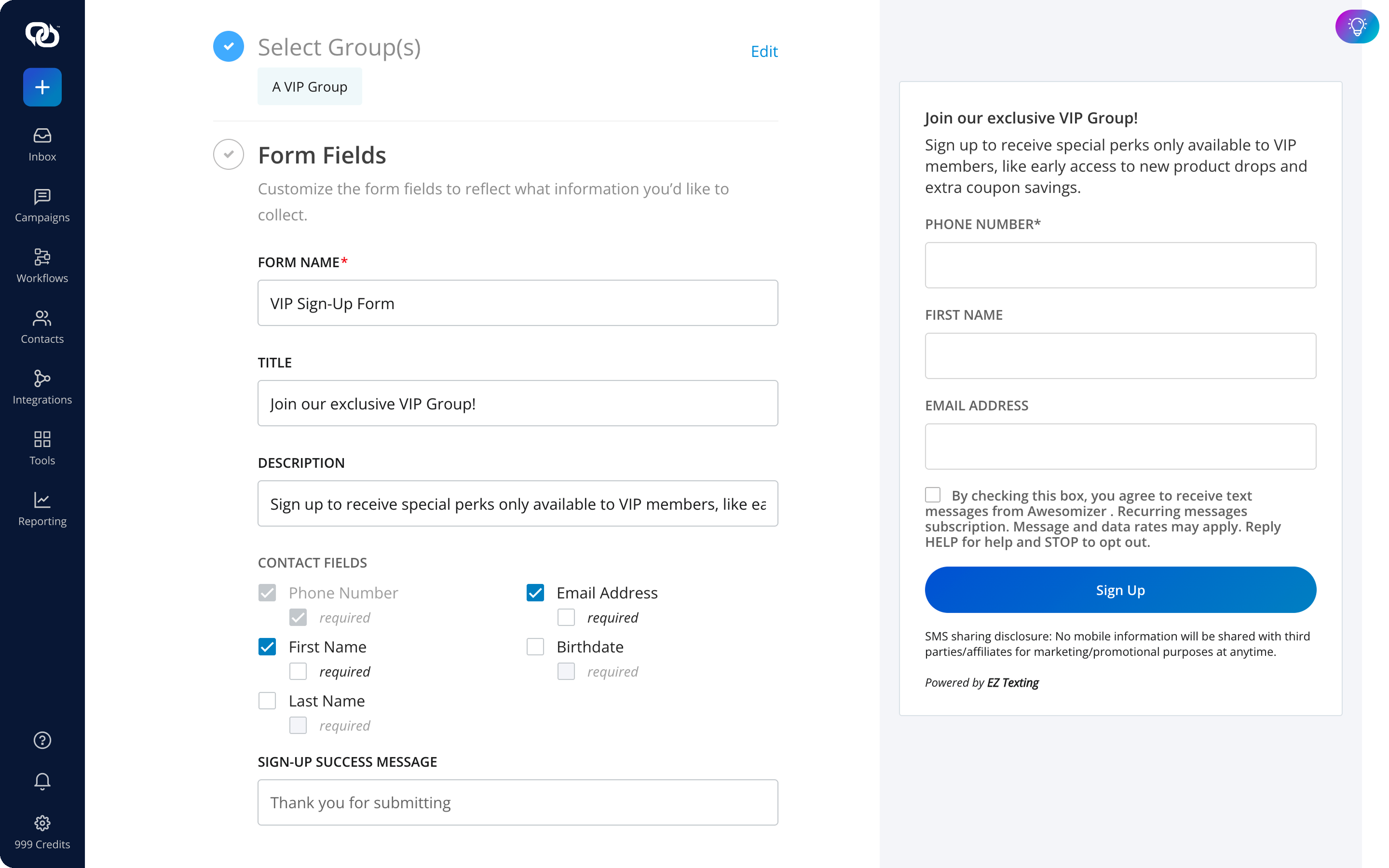
- A website pop-up that exchanges a clear incentive for enrollment
- An unchecked SMS consent box during checkout
- A QR code on packaging, receipts, inserts, or in-store signage
- A social campaign that directs followers to a compliant sign-up form
- A keyword (such as JOIN) that customers text directly to your number
Keyword campaigns work particularly well when the alternative is a URL that might be inconvenient to type or difficult to access.
Some businesses also use double opt-in. After the initial sign-up, the customer confirms enrollment through a reply or verification link. This can improve contact accuracy and help produce a more engaged list.
Setting Expectations at Sign-Up
Subscribers should know what they are signing up for before the first campaign arrives.
Explain whether they will receive product offers, loyalty updates, order information, or a mix of content, and provide a realistic estimate of monthly frequency. Send a welcome message immediately after enrollment, identifying your business, delivering any promised offers, and including opt-out instructions.
The first message should match the expectations set during sign-up and give subscribers a clear reason to stay engaged.
Personalization and Segmentation
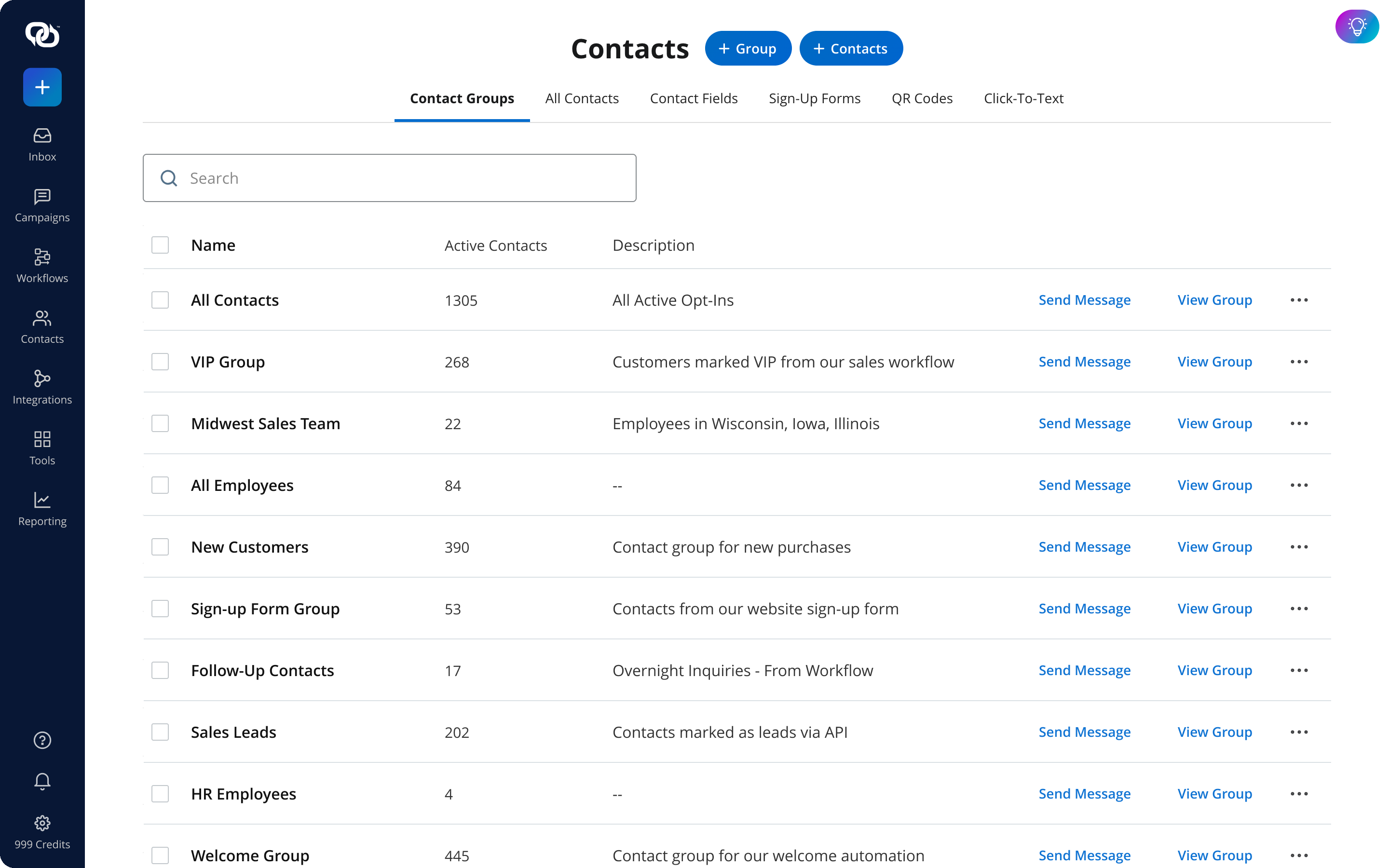
Segmentation groups subscribers according to shared characteristics:
- Purchase frequency
- Average order value
- Product category interest
- Last purchase date
- Location
- Loyalty program status
This helps you avoid sending the same campaign to customers with very different needs. Someone who regularly buys running gear may be interested in a restock alert for shoes, while a recent buyer may find care instructions or a delivery update more useful than another promotion.
Personalization takes that targeting a step further by adjusting the message for the individual recipient. Specific details make the message feel relevant without calling unnecessary attention to the data behind it. These may include:
- The customer’s first name
- Recent purchases
- Alerts for categories or products they have browsed before
As customer behavior changes, an SMS platform can update segments automatically and trigger messages based on current activity. This reduces the need for manual list building and helps campaigns stay aligned with each subscriber’s interests and purchase history.
SMS Marketing Best Practices for eCommerce
The way you manage timing, frequency, and message content directly affects engagement and opt-out rates. Even a strong offer can underperform when it arrives at the wrong time, includes a vague link, or reaches customers too often.
Timing and Frequency
Send timing should reflect the purpose of the message. Order confirmations should arrive immediately after checkout, while shipping and delivery alerts should follow the corresponding fulfillment event. Cart reminders are most effective when they arrive soon after the customer leaves checkout, while the item is still top of mind.
Promotional messages often require more time between delivery and action, allowing the customer to consider the offer and complete a purchase. Schedule sends according to the recipient’s local time zone, and avoid early morning or late evening outreach unless the message is expected and operationally necessary.
Be aware that too many messages can increase opt-outs, while long gaps may cause subscribers to forget why they joined. A practical approach is to establish a consistent baseline, monitor engagement, and adjust by audience segment instead of applying the same cadence to everyone.
Writing SMS Copy That Converts
Begin with the brand name so the recipient can identify the sender without opening an earlier thread. Then present the most important information first. For a promotion, that may be the discount. For a shipment, it is the current order status. Limit each message to one action and one destination. A direct product, checkout, or tracking link reduces the number of steps between reading and responding.
A standard SMS segment supports up to 160 GSM-7 characters, although certain symbols or Unicode characters can reduce the segment limit. Longer messages may be divided into several billable parts. Concise copy is easier to scan and usually more economical.
Specific language is more useful than broad promotional phrasing. For example:
- “[Brand]: Get 20% off outerwear through 9 p.m. Shop the sale: {link}”
This gives the customer a defined offer, a clear deadline, and a direct destination. A vague phrase such as “special savings available” does not provide the same level of context or urgency.
Measuring eCommerce SMS Performance
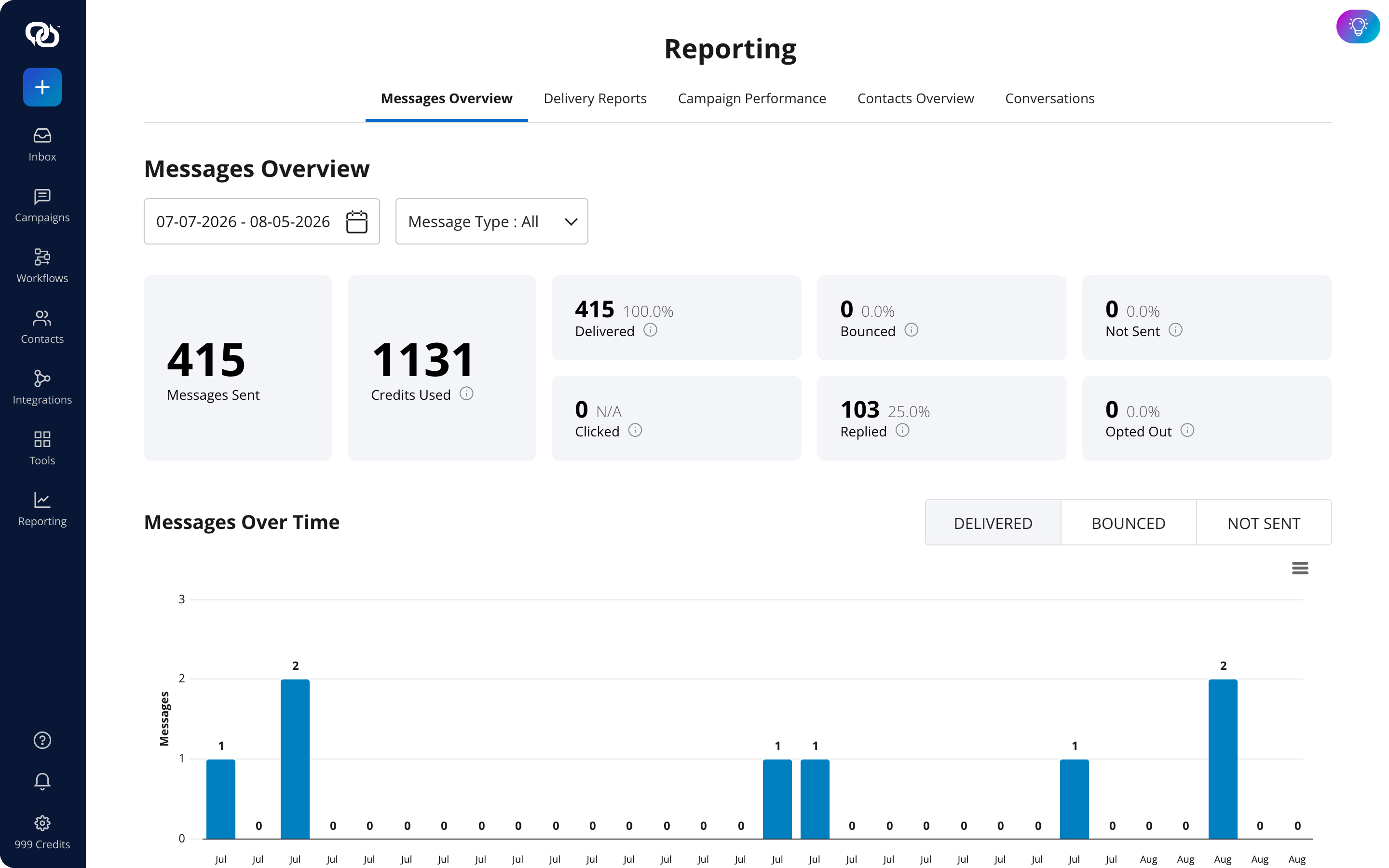
Campaign reporting shows you where the program is working and where it needs adjustment. The most useful metrics include:
- Delivery rate: Shows how many messages successfully reach subscriber devices. A declining rate may point to outdated contact information, carrier filtering, or broader list-quality problems.
- Opt-out rate: Tracks how many recipients unsubscribe after a send. Sudden increases may indicate that messages are too frequent, poorly targeted, or different from what subscribers expected.
- Click-through rate: Measures how many recipients tap the link in your message. It helps you evaluate whether the offer, wording, and call to action are strong enough to prompt further interest.
- Reply rate: Shows how often recipients respond to conversational messages, surveys, support prompts, or feedback requests. It can help you assess whether the campaign encourages active participation.
- Conversion rate: Tracks how many recipients complete the intended action after engaging with the message, such as making a purchase, redeeming an offer, or finishing checkout.
- Revenue per message: Connects campaign costs directly to sales, making it possible to compare SMS performance with email, paid search, social advertising, and other channels using a single financial measure.
Review these metrics together. A high click-through rate paired with weak conversions may point to the landing page, pricing, or checkout process. A low click-through rate may indicate that the audience, offer, or message needs refinement. A/B testing can help identify which campaign element is affecting performance. Test one variable, such as the send time or CTA, with a portion of your audience. Keep the remaining elements consistent, review the result, and apply the stronger version to a wider segment.
How EZ Texting Supports eCommerce SMS Marketing
EZ Texting helps eCommerce businesses build and manage SMS campaigns without creating separate systems for list growth, automation, segmentation, and compliance.
- Grow a compliant subscriber list:Use keyword opt-ins, sign-up forms, and QR codes across websites, packaging, receipts, and in-store materials.
- Send SMS and MMS campaigns: Share promotions, back-in-stock alerts, product launches, order updates, and other customer communications.
- Build automated workflows: Trigger welcome messages, purchase follow-ups, cart recovery texts, and post-purchase sequences based on customer actions.
- Segment contacts: Organize subscribers by purchase history, loyalty status, location, interests, or engagement level.
- Support compliance:Track opt-ins, process opt-outs automatically, and maintain subscriber records that support TCPA compliance.
- Manage customer conversations: Handle replies and two-way exchanges from the same platform used for campaign sends.
- Review campaign performance:Track delivery, clicks, replies, conversions, and other activity to improve future campaigns.
Streamline your ecommerce SMS strategy. Start your free trial and see how EZ Texting can support list growth, campaign automation, and customer communication across the entire eCommerce journey.
Frequently Asked Questions About eCommerce SMS Marketing
eCommerce SMS marketing uses text messages to send opted-in customers promotions, product alerts, cart reminders, order updates, and other shopping-related communications.
Common uses include flash sales, back-in-stock alerts, abandoned cart recovery, loyalty offers, shipping notifications, and post-purchase follow-ups.
Yes. Businesses should obtain clear consent before sending promotional SMS messages and provide a straightforward way for subscribers to opt out.
There is no universal schedule. Set expectations during sign-up, maintain a consistent cadence, and adjust frequency based on engagement and opt-out rates.
No. SMS works best for concise, time-sensitive communication, while email is better suited to longer content and multi-product campaigns. Many brands use both as part of a coordinated strategy.
See other related to Features:
See other related to Use Cases:
See other related to Topics: