SMS Marketing Compliance: What Every Business Needs to Know Before Texting Customers
What does SMS marketing compliance actually require? A breakdown of TCPA, CTIA, and state rules covering consent, opt-outs, timing, and messaging.


- SMS marketing compliance in the U.S. is governed mainly by the federal TCPA, alongside CTIA carrier guidelines and a growing set of state laws.
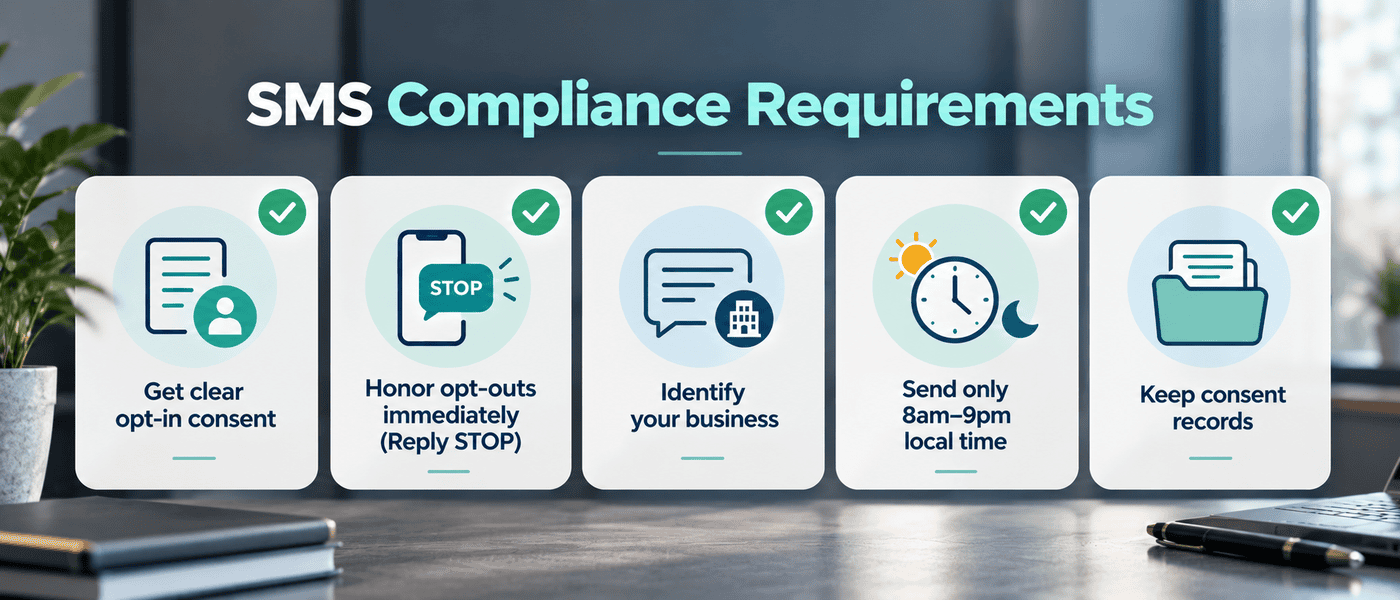
- The core requirements are the same across the board: get clear opt-in consent, honor opt-outs immediately, identify your business, and send only within permitted hours.
- Non-compliance is expensive, with per-violation TCPA penalties, class-action risk, and carrier filtering that hurts deliverability.
- EZ Texting includes built-in compliance tools that automate opt-outs, consent records, and quiet hours so every campaign stays legally sound.
Why SMS Marketing Compliance Matters
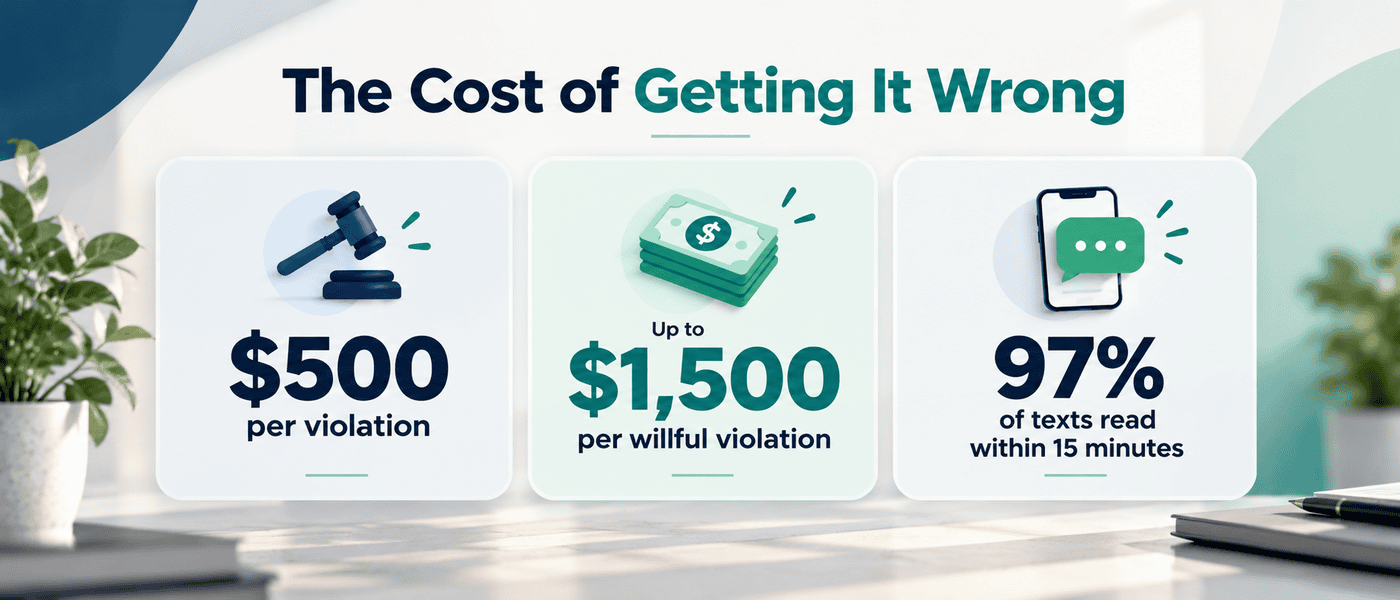
SMS marketing compliance must be treated as a business-critical priority rather than merely an administrative box to be checked casually. These regulations exist to protect consumers’ privacy and communication preferences in a channel that is uniquely personal compared to other marketing avenues. Text messages arrive in the same location where people receive messages from family and friends (their phones) and they command near-universal attention. In fact, 97% of text messages are read within 15 minutes of delivery.
The Telephone Consumer Protection Act (TCPA) specifies required behavior for any business sending SMS messages for marketing purposes in the USA (which we’ll cover below). Non-compliance with TCPA regulations exposes businesses to penalties of up to $500 per standard violation and up to $1,500 per willful violation, assessed on a per-message basis. This means a single campaign sent to a non-consenting list could generate thousands of violations simultaneously and expose a business to settlement liability that routinely reaches tens of millions of dollars in class action cases.
The regulatory landscape for SMS marketing continues to evolve through court decisions, FCC rulemaking, and CTIA guideline updates (see below), and partnering with an SMS platform that stays current on compliance requirements is one of the most important decisions a business makes when setting up an SMS marketing program.
However, compliance is not just about avoiding penalties (though that’s hugely important). It’s also about protecting the subscriber trust that makes SMS marketing so effective in the first place.
Compliance is not a box to check, it is the foundation that keeps your texts deliverable and your business protected.
The Most Important SMS Marketing Compliance Requirements
Compliance is not a box to check, it is the foundation that keeps your texts deliverable and your business protected.
Obtaining Express Written Consent
As we mentioned above, the TCPA requires prior express written consent before any promotional SMS message can be sent. This consent must be explicit, meaning the subscriber must take an affirmative action to agree to receive marketing texts. You can’t assume consent based on a previous purchase, email marketing sign-up/opt-in, or other non-SMS interaction. You cannot simply import an existing list of customer phone numbers, either. Each SMS recipient must have explicitly opted-in to receive SMS marketing messages.
Additionally, the consent disclosure shown to the subscriber at the point of opt-in must be clearly visible and in close proximity to the call to action; it must explain that the subscriber is agreeing to receive recurring, automated marketing text messages; it must identify the sending business by name; and it must include information about message frequency, message and data rates, and how to opt out.
Sending a Compliant Confirmation Message
After a subscriber joins your SMS program, your business must send a confirmation message that includes your business name, a description of the expected recurring texting frequency, a disclaimer that message and data rates may apply, instructions for how to get assistance by replying HELP, and instructions for how to opt out by replying STOP.
Including a link to your business’s privacy policy in the confirmation message is a CTIA best practice that demonstrates transparency and builds subscriber trust from the first interaction.
Including Required Elements in Every Campaign Message
In addition to the above requirements to your confirmation message, every promotional SMS message must identify your business by name, and must include opt-out instructions such as "Reply STOP to unsubscribe."
CTIA guidelines recommend including opt-out information at regular intervals, at least once per month, in your business’s content or service messages even for subscribers who have been on the list for an extended period, reinforcing their ability to exit the program at any time.
Messages should comply with the CTIA’s content restrictions including the above-described SHAFT prohibitions, and you should always review all message content for compliance before sending.
Respecting Send Time Restrictions
The TCPA and related state laws prohibit promotional text messages from being sent before 8am or after 9pm in the recipient’s local time zone. Sends outside these hours constitute a violation regardless of whether the subscriber’s device is on or off at the time of delivery. If you’re sending national campaigns, make sure all time zones are within the allowed window at time of delivery.
Honoring Opt-Out Requests Immediately
The TCPA requires businesses to honor opt-out requests immediately and subscribers who reply STOP, END, CANCEL, UNSUBSCRIBE, or QUIT must be removed from all future marketing sends, regardless of where they are in the business’s customer lifecycle or how recently they made a purchase.
You must also maintain an internal suppression list of contacts who have opted out and suppress those numbers from all future campaigns, including automatically triggered messages.
Building a Compliant SMS Opt-In Experience
Let’s go over methods to obtain compliant opt-in confirmation when building your subscriber list.
Website and Pop-Up Opt-Ins
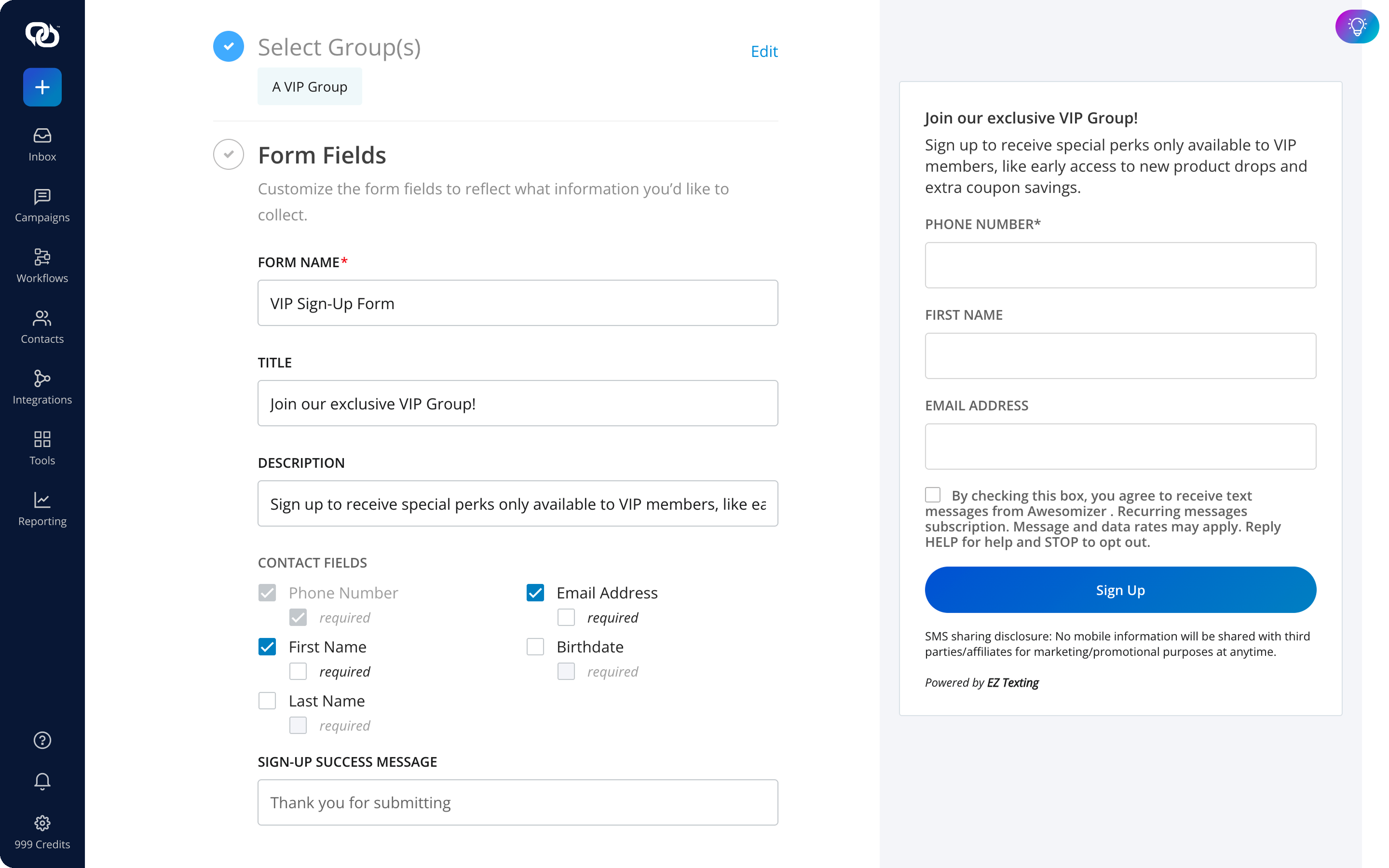
Website pop-ups and embedded form opt-ins must display the required disclosure language clearly and in close proximity to the sign-up call to action, with the text large enough to read, contrasting sufficiently with the background, and not hidden behind a scroll or behind a link that requires additional navigation to access. The disclosure must clearly state that by providing their phone number, the subscriber is agreeing to receive recurring marketing text messages from the identified business, and must include information about message frequency, that message and data rates may apply, and links to the business’s Terms and Conditions and Privacy Policy.
Keyword and Short Code Opt-Ins
Keyword opt-ins allow customers to join an SMS list by texting a word to a short code or long code, which is the lowest-friction method to earn and opt-in new subscribers. However, any advertising or signage promoting the keyword opt-in must include the required disclosure information including the program description, message frequency, data rates disclaimer, and opt-out instructions so subscribers have the information they need before texting to opt-in.
The automated response triggered when a new subscriber texts the keyword should serve as the compliant confirmation message that includes or links to all required program information, since this is typically the first direct communication the subscriber receives after opting in.
Checkout and In-Store Opt-Ins
Checkout opt-ins for eCommerce businesses must include the required disclosure language in close proximity to the phone number field or SMS consent checkbox. (Note that pre-checked consent boxes do not constitute valid express written consent under the TCPA because they do not require the subscriber to take an affirmative action to agree.)
In-store opt-ins through physical sign-up forms, QR codes, or verbal sign-ups must provide subscribers with the required disclosure information before they complete the opt-in, and businesses must keep documentation of in-store consent collection processes that can be referenced if compliance is ever questioned.
See other related to Features:
See other related to Use Cases:
See other related to Topics:
