Why Use SMS Marketing? The Business Case for Text Message Marketing
SMS marketing achieves 98% open rates, 45% response rates, and strong ROI across every industry. Here is the business case for adding text marketing to your strategy and how to get started.


- SMS marketing gives businesses a direct way to reach opted-in customers, with widely reported open rates approaching 98% compared with roughly 20% for email.
- Texting works best alongside email: SMS supports urgent, action-focused messages, while email provides space for greater detail.
- EZ Texting brings campaign creation, automation, audience targeting, and performance tracking into one platform.
Eight Reasons to Use SMS Marketing for Your Business
SMS can support revenue-generating campaigns and everyday customer communication through the same channel. Its strongest advantages come from the combination of reach, speed, and direct access.
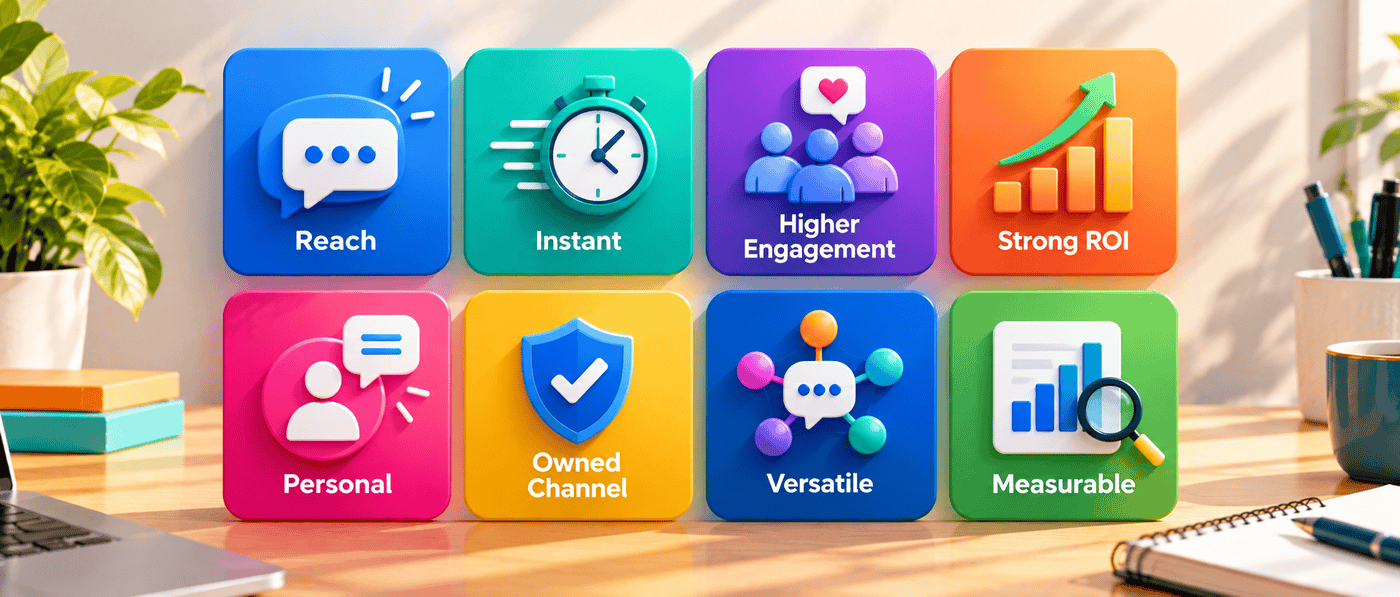
Near-Universal Reach on a Channel Customers Already Use
SMS does not ask customers to create an account, download an app, or learn a new platform. Anyone with a text-capable mobile phone and cellular service can receive a message, which makes the channel accessible across devices and levels of technical comfort.
Texting is also part of customers’ existing routines. 82% of consumers text every day, while 47% check their messages more than ten times daily. Businesses can reach customers in a place they already visit frequently instead of trying to draw them into another platform.
Immediate Delivery and Near-Instant Engagement
Some messages only work if customers see them quickly. A flash sale loses its pull after it ends, and a schedule change cannot help someone who reads it tomorrow. SMS is built for those moments, 90% of texts are read within three minutes of delivery.
That speed lets businesses place messages closer to the moment customers need to act. With EZ Texting’s text message automation, campaigns can be scheduled in advance or triggered by customer activity, so a reminder or limited-time offer arrives while it is still relevant.
Significantly Higher Engagement Than Email
SMS has an average response rate of 45%, compared with 6% for email. Click-through benchmarks show a similar advantage, with rates near 19% for SMS and 4% for email.
It’s the format that supports stronger response. Customers have chosen to receive texts, which means they are automatically more interested in your message. They are usually even more interested when messages are brief, and the next step simply requires a tap or short reply. A focused offer or confirmation request can move someone to action without asking them to sort through a longer message first.
Cost-Effectiveness and Strong Return on Investment
SMS typically costs one to five cents per message, depending on the provider, send volume, and message length. That predictable cost makes it easier to set a campaign budget and understand how much revenue each send must generate to pay for itself.
Industry estimates place SMS returns between $21 and $41 for every dollar spent, though actual results vary widely. Businesses can calculate their own return by subtracting campaign costs from attributed revenue, then dividing the result by campaign costs. Tracked links and unique promo codes make that calculation more reliable than applying a general benchmark to every send.
Direct, Personal Communication That Builds Trust
Opting in to business texts gives a brand access to the same inbox customers use for personal conversations. That access can strengthen a relationship, but only when messages respect the permission behind it.
Customers respond well when texting makes communication easier. In fact, 95% say they would trust a brand more if it were easy to start a conversation with that business. Appointment reminders, shipping updates, and useful replies give customers a reason to keep that connection open. Irrelevant promotions or excessive messages have the opposite effect.
Owned Channel with Complete Control
Social media reach can drop after an algorithm change, and paid advertising stops when the budget does. SMS is far more consistent and less affected by outside influences. The people in control include your business and the consumers themselves, since they have to opt in.
The subscriber list remains a company asset rather than an audience held inside another platform. Businesses still need to follow carrier rules and consent requirements, but they control the message, audience, and send time. That makes SMS a more durable investment than channels where continued access depends on paying for placement or staying visible in a feed.
Versatile Across Every Stage of the Customer Journey
A customer’s reason for hearing from a business changes over time, and SMS can adapt with it. A welcome message can deliver an opt-in offer, while an abandoned cart text can bring an interested shopper back. Later messages might provide a shipping update or invite the customer to join a loyalty program.
The same flexibility supports service-based businesses. Appointment reminders can confirm upcoming visits, and follow-up texts can collect feedback afterward. Businesses can manage promotional and operational communication through one platform while tailoring each message to the customer’s current need.
Measurable Performance with Clear Attribution
SMS campaigns create a direct trail between the message sent and the action taken. Delivery rates show how much of the list was reached, while link clicks and replies reveal how customers responded. Unique links or promo codes can then connect purchases and bookings to a specific campaign.
EZ Texting’s analytics dashboard brings those results together with opt-out data. Comparing performance across sends helps businesses see which offers and audience segments produce returns, then use that information to shape the next campaign.
Why Use SMS Marketing in Your Industry?
The strongest use cases for SMS depend on what customers need from a business. Here, we explore how different industries can best use SMS marketing to connect with customers.
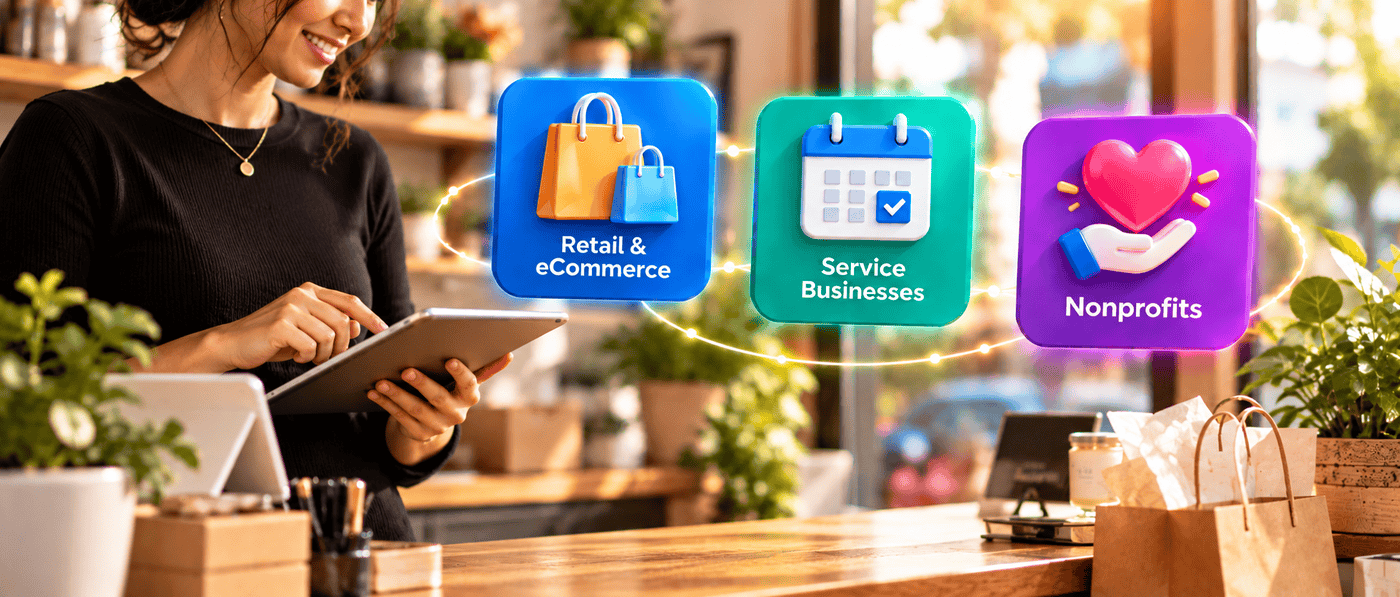
Retail and eCommerce
Retail and eCommerce brands often have a short window to turn interest into a sale. Back-in-stock alerts can reach shoppers while inventory is available, and abandoned cart texts can reconnect them with products they already considered. Flash sale messages work for the same reason: customers receive the offer while there is still time to buy.
SMS can support purchases beyond inexpensive impulse items. Sixty-eight percent of consumers have spent more than $50 on a single item purchased through text messaging, while 18% of U.S. consumers made four or five SMS-prompted purchases within a year. That repeat activity makes texting useful for both immediate conversion and customer retention.
Service Businesses
For appointment-based businesses, an empty time slot can mean revenue that cannot be recovered later. Text reminders give customers a quick way to confirm or reschedule, leaving the business more time to offer an opening to someone else.
This is especially useful for healthcare providers, salons, fitness studios, and home service companies that rely on a full schedule. Two-way texting also gives customers a convenient alternative to calling when they need to change an appointment, helping the business update its calendar sooner.
Nonprofits and Community Organizations
Nonprofits often need supporters to respond within a specific window. A fundraising deadline, event reminder, or volunteer schedule change can lose its value if it sits in an email inbox for several days.
SMS gives organizations a quick way to reach opted-in supporters, even with a smaller budget. A text can direct donors to a campaign page, confirm volunteer availability, or share a last-minute update with event attendees. Because recipients can reply, nonprofits can also use the channel to answer questions and coordinate participation without relying on a long email exchange.
See other related to Features:
See other related to Use Cases:
See other related to Topics:
