How SMS Marketing Works: A Plain-Language Guide for Small BusinessesView as Markdown

SMS marketing works by collecting opted-in subscribers, crafting targeted messages, automating delivery through a platform, and measuring results. Here is how the full process works for small businesses.


Illustration of the step-by-step SMS marketing process
Key Takeaways
  • SMS marketing is permission-based: you text a list of people who opted in, through a platform built for scale, tracking, and compliance, unlike casual personal texting.
  • The process runs in seven steps: build a list, segment contacts, create messages, set up campaigns and automation, deliver, manage replies, and measure.
  • Businesses send three message types: promotional (needs written consent), transactional (order and appointment updates), and conversational (two-way).
  • Compliance is built in: the TCPA requires express written consent, 8 a.m. to 9 p.m. sending, and immediate opt-outs, with CTIA rules and 10DLC on top.
  • EZ Texting turns the whole process into a few clicks, from sign-up tools and segmentation to automation, two-way replies, and reporting.

What Is SMS Marketing and How Is It Different From Personal Texting?

Texting a friend and running an SMS marketing program use the same phones, but almost nothing else is the same. Personal texting is one-to-one and casual. SMS marketing is a permission-based channel where a business sends relevant texts to a list of people who opted in, through a platform built for sending at scale, tracking results, and staying compliant.

SMS marketing works by collecting opted-in subscribers, organizing them, sending targeted messages through a platform, handling replies, and measuring what worked. Here is how that full process actually runs for a small business.

Every SMS marketing program follows the same seven steps, from first opt-in to measuring results.

How Business SMS Marketing Works: The End-to-End Process

Every SMS marketing program follows the same seven steps, from first opt-in to measuring results.

  • Step 1: Build a subscriber list

    It starts with permission. People join your list by texting a keyword to your number, filling out a web sign-up form, or opting in at checkout. Every subscriber has agreed to hear from you, which is what separates marketing from spam.

  • Step 2: Organize and segment contacts

    Once people join, you group them. Segmenting your contacts by interest, location, purchase history, or signup source lets you send each group messages that actually fit them, instead of one blast to everyone.
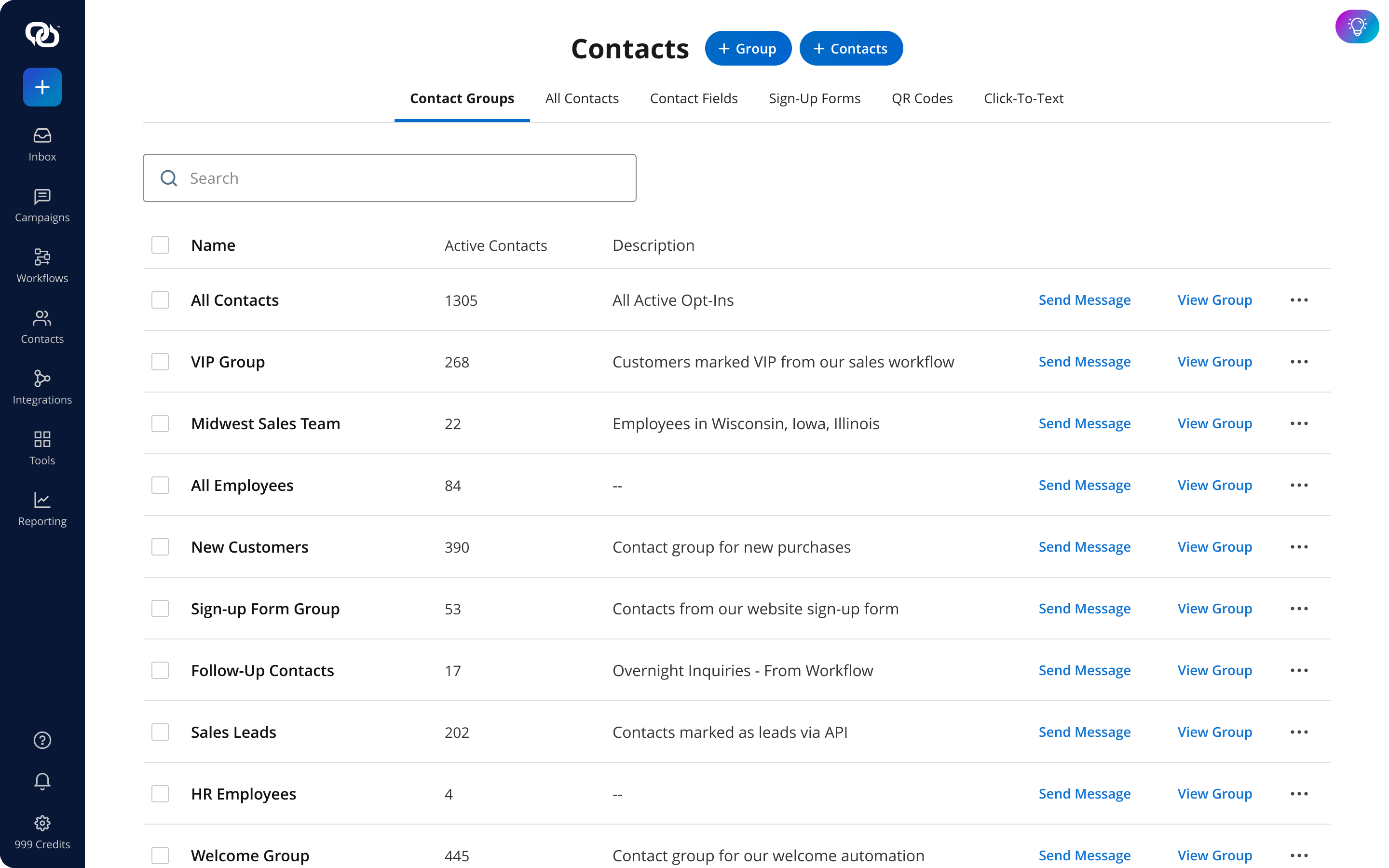
    EZ Texting contacts screen showing subscribers segmented into targeted groups.

    Segment your opted-in contacts in EZ Texting so each group gets a message built for them.
  • Step 3: Create your messages

    Next you write the text. Good SMS is short, clear, and built around one call to action, with the sender identified and an easy way to opt out. Many platforms include AI tools and templates to help you draft faster.

  • Step 4: Set up campaigns and automation

    You decide how messages go out. A one-time campaign sends to a segment on a schedule, while automation triggers texts off events, like a welcome message when someone joins or a reminder before an appointment, so the right text sends itself.

  • Step 5: Deliver messages to subscribers

    When you hit send, the platform routes your text through the carriers to each subscriber's phone, usually within seconds. Sending from a registered 10DLC number or short code keeps delivery fast and reliable.

  • Step 6: Manage subscriber responses

    SMS is a two-way channel. With two-way texting, replies land in an inbox your team can answer, turning a broadcast into a real conversation and handling opt-outs automatically.

  • Step 7: Measure performance and optimize

    Finally, you track what happened. Open, click, reply, and opt-out rates show what resonated, and A/B testing different messages tells you what to send more of. Each round makes the next one better.

Types of SMS Marketing Messages Businesses Send

Most business texts fall into three types, and knowing the difference shapes both your content and the consent you need.

  • Promotional messages

    Promotional texts market a sale, offer, or product, like a flash-sale alert or a coupon. They drive revenue and require express written consent to send.

  • Transactional messages

    Transactional texts deliver something the customer expects: order confirmations, shipping updates, appointment reminders, and account alerts. They are informational and tend to earn the highest engagement because people want them.

  • Conversational messages

    Conversational texts are a real back-and-forth: answering questions, booking an appointment, or helping with support. They build relationships and make your brand feel human.

SMS Marketing Compliance: What Every Business Must Know

Because texting is permission-based, compliance is part of how it works, not an afterthought. The TCPA requires express written consent before you send marketing texts, limits sending to between 8 a.m. and 9 p.m. in the recipient's local time, and requires you to honor opt-outs immediately. Carrier rules (the CTIA guidelines) and 10DLC registration add to that. A good platform builds these safeguards in, so staying compliant does not slow you down. For the full picture, see our guide to SMS compliance.

How EZ Texting Makes SMS Marketing Work for Small Businesses

EZ Texting

EZ Texting turns that seven-step process into a few clicks. Keyword and web sign-up tools grow your opted-in list, contact segmentation targets the right people, AI-assisted composing and templates speed up your messages, and automation sends triggered texts on its own. Two-way texting handles replies, built-in reporting measures results, and SafeSTOP plus guided 10DLC registration keep you compliant throughout.

Start Seeing How SMS Marketing Works for Your Business

Now that you know how SMS marketing works, the fastest way to learn it is to run your first campaign. Start a free trial with EZ Texting and send a compliant, opted-in text to your first segment today.

Frequently Asked Questions About How SMS Marketing Works

You collect subscribers who opt in, group them into segments, write short targeted texts, and send them through a platform as scheduled campaigns or automated triggers. The platform delivers each text through the carriers, routes replies to your team, and reports on opens, clicks, and opt-outs so you can improve.

Personal texting is casual and one-to-one. SMS marketing is permission-based: every recipient opted in, messages go out through a platform built for scale and tracking, and the whole program must follow laws like the TCPA and carrier rules that do not apply to texting a friend.

Yes. People must agree to receive your texts, and for promotional messages that agreement must be express written consent. They can opt in by texting a keyword, filling out a form, or checking a box at signup, and they can opt out anytime by replying STOP.

Most texts reach subscribers within seconds of sending, which is a big reason open rates are so high. Sending from a registered 10DLC number or short code keeps delivery fast and reliable even for large lists.

14-DAY FREE TRIAL
Take EZ Texting for a Spin
The easiest way to add SMS to your business. No credit card required.
1,000+ five-star reviews

Join the 230,000+ Who Have Used EZ Texting to Connect with Their Audiences.