How to Build a Marketing Plan That Reliably Drives SalesView as Markdown

A marketing plan turns business goals into a documented, trackable strategy. Here is a step-by-step way to build one that drives sales, with SMS as the direct-response channel that ties it together.


Five-step marketing plan roadmap: set goals, know your audience, choose channels, launch campaigns, measure and grow
Key Takeaways
  • A marketing plan turns your business goals into a documented course of action, with each campaign and channel tied to a specific sales and revenue outcome.
  • Your plan should define who you want to reach, which channels you will use, how much you will spend, when campaigns run, and how you will measure performance.
  • Direct channels such as SMS give you a more reliable way to reach customers without depending entirely on changing social algorithms.
  • Writing the plan down gives you a consistent framework for deciding what to prioritize and adjusting your marketing based on results.

What Is a Marketing Plan?

You can post regularly, send emails, run promotions, and still struggle to know what is working. A marketing plan helps you be more purposeful with your resources and outreach. It connects what you want to achieve with who you need to reach and where you will reach them, so instead of guessing what to post, you have an intentional, documented, and trackable strategy.

A marketing plan is a time-bound document that lays out how your business will reach a specific goal. It defines what you will do, which customers you will target, where campaigns will run, when they will launch, what you will spend, and how you will measure results.

You may see "marketing plan" and "marketing strategy" used together, with minor differences. A strategy is broader: it establishes how you intend to compete and reach customers, while a marketing plan translates that direction into actual campaigns and decisions you can put on a calendar. If you are still working through that bigger picture, these small business marketing strategies can help you set your approach first.

The best plans cover your goals, audience, channel mix, campaign calendar, budget, and performance metrics. That is how you build a concrete, actionable way to decide where your marketing resources should go and what they need to accomplish.

Why Hopeful Social Media Posting Does Not Drive Sales

Posting on social media can support your marketing, but some teams fall into the trap of posting often and aimlessly. That is not the same as having a plan. If you cannot connect a post or campaign to a goal, it is hard to tell what all that activity is producing.

Organic social also comes with a major limitation: you do not control your reach. Algorithm changes affect how many followers see your content, so your results depend on decisions made by the platform, not the customer.

A marketing plan gives social media a defined role alongside channels such as search, email, and SMS. That mix lets you attract new customers while building direct ways to reach people who already showed interest. Instead of asking "What should we post this week?" you give each channel a specific job, such as attracting new prospects or bringing interested customers back to buy.

Step 1: Start With a Sales Goal, Not a Content Calendar

Before choosing campaigns or channels, put a number on what you want your marketing to produce in a specific period. That could be $30,000 in sales during a seasonal promotion or 100 qualified leads ahead of a product launch. Tie the goal to your business goals and to what generates real revenue.

Then work backward. Say your goal is $30,000 in revenue and your average order is $100. You need 300 purchases. If 5% of qualified leads typically buy, you need about 6,000 leads to hit the target.

Everything should connect back to those figures as you build the rest of the plan. You can evaluate channels by their ability to generate those leads and decide how much you can afford to spend to acquire a customer. You might also tie your goal to a business event, such as a seasonal promotion, a new product, or a membership renewal window, then set campaign frequency around the deadline. Your content calendar comes later, once you know what that content is supposed to produce.

Step 2: Get Specific About Your Audience and How They Buy

Once you know the result you are working toward, identify the customers most likely to help you reach it. Go beyond basic demographics and look at what prompts them to buy, what holds them back, and where they already interact with your business.

Your existing customer data is a great place to start. Purchase history shows who buys repeatedly or responds to certain offers, while email and SMS engagement reveal which contacts are still paying attention. Segmenting your list by factors like these gives you a better basis for planning effective, customized campaigns.

You do not need an expensive research project to fill in the blanks. Review past campaign and sales data, or ask customers a few targeted questions. Many businesses already have this information in their email list, point-of-sale system, or customer database. Put those insights to work before deciding how and where to market.

Understanding Channel Preference by Audience

To be persuasive, go where your message will be appreciated and acted on most. Someone who rarely checks social media may still respond quickly to a text, while another customer prefers email for less urgent communication. SMS is especially useful when timing matters, because text messages tend to have high open rates.

You can also put the choice in the customer's hands instead of guessing. Let customers pick their communication channels when they sign up, make a purchase, or join your list. That gives people more control and gives you more data to compare against your campaign results to see where they actually respond.

Step 3: Build a Multi-Channel Strategy Around Owned Channels

For most small businesses, two or three well-chosen channels are far more manageable, and often more impactful, than maintaining accounts on every platform.

Start by deciding what role each channel will play. Search or social might introduce your business to new prospects, while email and SMS follow up with people who already subscribed or purchased. Your website gives those efforts somewhere to convert, such as a product page, booking form, or quote request.

Pay particular attention to channels where you have a direct connection to your audience. With an email or SMS list, you can reach opted-in subscribers without waiting for an algorithm to put your message in front of them. Paid search and social can still expand your reach, but they do not have to carry the entire plan. Choose your mix based on the buying behavior you identified in Step 2 and the sales target you set in Step 1.

Step 4: Add SMS to the Plan for Direct, Trackable Sales

SMS gives you a direct-response channel for the moments when you want customers to act quickly. Time-sensitive promotions, appointment reminders, and abandoned-cart messages can reach opted-in customers on a device they check throughout the day.

An SMS marketing plan can also pick up where your awareness channels leave off. A customer might discover you through search or social, join your text list, and later get an offer that brings them back to buy. Build that list with clear opt-in language, and give subscribers a simple way to opt out, so you are messaging people who still want to hear from you.

Automation makes this easier to keep up with. Scheduled campaigns, drip sequences, and keyword-triggered replies keep messages moving without someone manually sending every follow-up, which gives you an edge over businesses still running SMS one campaign at a time.

Step 5: Set a Realistic Budget and Campaign Calendar

Now put resources and dates behind the channels you chose. Use your sales target to decide what you can reasonably spend to acquire a customer, then prioritize the channels where you can most clearly connect that spending to conversions.

Next, map campaigns across the quarter. One or two major promotions per month gives you time to develop the offer, coordinate messages across channels, and follow up with interested customers. Planning 30 to 90 days ahead also leaves room to adjust when performance changes or a timely opportunity appears.

Put the schedule somewhere everyone can see it. A shared calendar or marketing plan template can capture campaign dates, budgets, channel assignments, and deadlines, so marketing and sales both know what is coming.
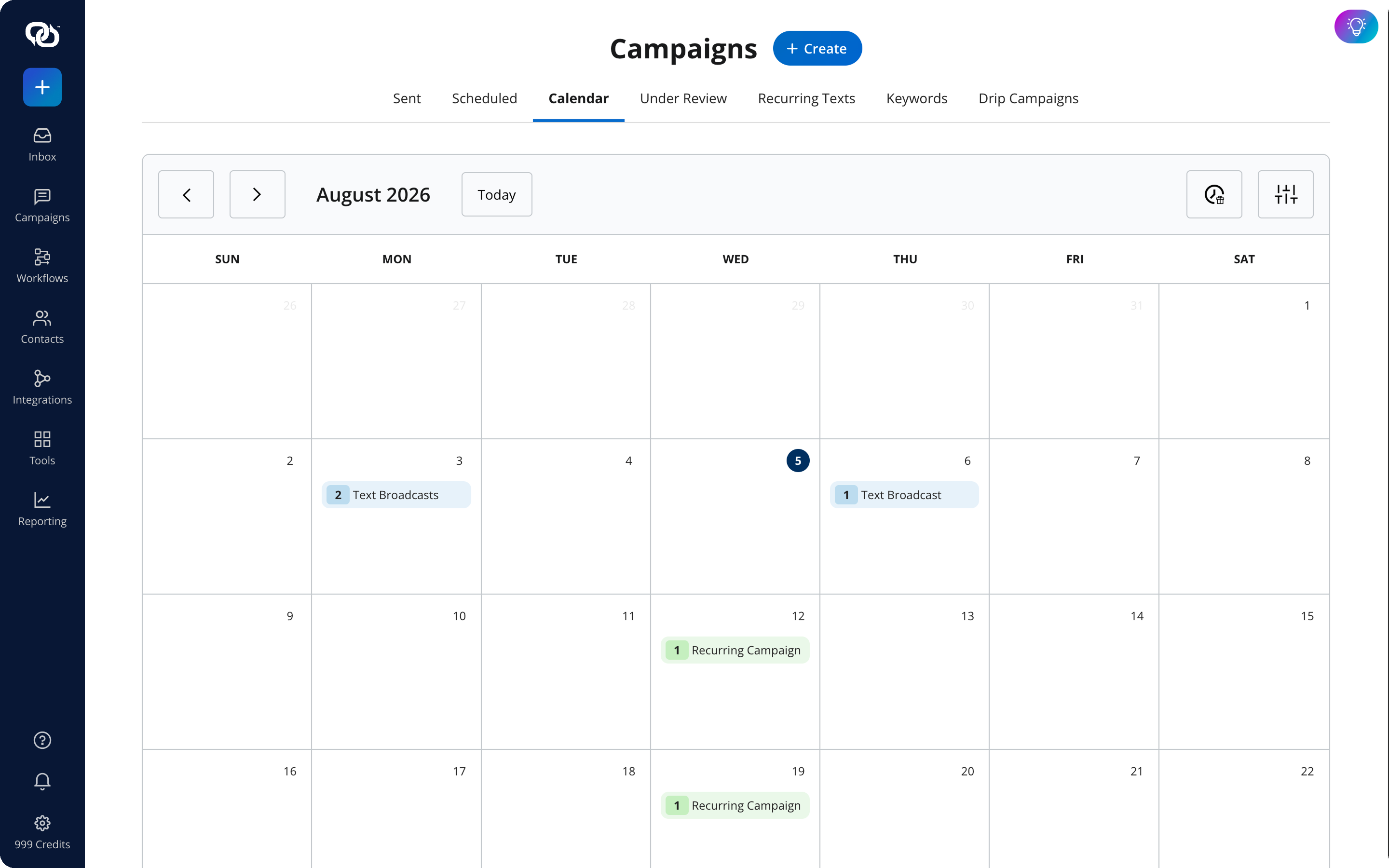
EZ Texting campaign calendar and scheduling

EZ Texting schedules campaigns on a shared calendar so your team can plan promotions 30 to 90 days ahead.

Step 6: Track the Metrics That Actually Predict Sales

A campaign can generate plenty of attention without generating much business. Likes and impressions still have a place in your reporting, but your plan should prioritize the numbers that show what happens after someone engages:

  • Conversion rate: The percentage of people who complete the action you want, such as making a purchase or booking an appointment.
  • Cost per acquisition: How much you spend to gain each new customer, compared against the budget you set earlier.
  • Customer lifetime value: How much revenue a customer generates over the course of their relationship with your business.
  • Lead-to-customer rate: The percentage of leads that become paying customers, a check on the assumptions behind your sales target.

Direct channels also give you warning signs. If SMS opt-outs or email unsubscribes start climbing, look at your targeting and send frequency before the problem shows up in revenue. Poor segmentation and outdated contacts are among the first things to fix, since they leave you paying to reach people unlikely to respond. Give campaigns enough time to produce meaningful data, then compare actual leads, sales, and acquisition costs against your original targets in a monthly or quarterly review. Keep investing where the numbers support it, and adjust the parts that fall short.

Common Mistakes That Quietly Undermine a Marketing Plan

What if a campaign is running but not delivering, or results are slipping and you are not sure how to pivot? Check these common problems before adding more fuel to the fire:

  • Prioritizing output over outcomes: Publishing more content will not fix a plan that is not generating enough leads or sales. Go back to the target and find where customers drop off.
  • Depending too heavily on one channel: A decline in organic reach or a platform change can quickly hurt results when one source carries most of your marketing.
  • Letting your contact lists go stale: Outdated contacts and broad, unsegmented sends drag down email and SMS performance over time.
  • Sticking to the plan after the business changes: Revisit your assumptions after a major product launch, a significant platform change, or a sustained shift in customer response.

How EZ Texting Helps You Put the Plan Into Motion

SMS is an important part of any marketing plan, and EZ Texting gives you the tools to put it into motion. The platform is built for small and midsize businesses that want to run text campaigns without a complicated technical setup.

EZ Texting

With EZ Texting, you can manage contacts, send bulk SMS and MMS campaigns, create keywords for list growth, and schedule automated messages. Built-in analytics let you track campaign performance so you can use the results in the regular reviews you planned in Step 6. Compliance support helps you manage opt-ins and opt-outs as your list grows, and short codes can support higher-volume messaging. Following the same structure each time you build an SMS marketing campaign makes it easier to carry the strategy from your larger plan into individual sends.

Turn Your Marketing Plan Into Sales

Remember the sales goal you started with in Step 1? That number can have a documented, data-driven marketing plan behind it. The next step is to run campaigns and see how your assumptions hold up against real customer behavior. Start your free trial with EZ Texting and turn your SMS strategy into active campaigns.

Frequently Asked Questions About Marketing Plans

A marketing plan is a documented roadmap for reaching a specific business goal within a set period. It covers your target audience, channel mix, campaigns, budget, schedule, and performance metrics, so you can connect marketing activity to measurable results.

A marketing strategy defines the larger approach your business uses to attract and retain customers. A marketing plan turns that strategy into specific campaigns, channels, budgets, timelines, and measurement practices.

Review performance monthly or quarterly, depending on how often you run campaigns. You may also need to revisit the plan after a major change, such as launching a new product, entering a new market, or a sustained shift in customer response.

Not necessarily. Social media can help with awareness and engagement, but it is only one possible channel. Your plan should reflect where your audience spends time and which channels contribute to your goals. Search, email, SMS, and your website may deserve more attention depending on how your customers buy.

14-DAY FREE TRIAL
Take EZ Texting for a Spin
The easiest way to add SMS to your business. No credit card required.
1,000+ five-star reviews

Join the 230,000+ Who Have Used EZ Texting to Connect with Their Audiences.