The Importance of SMS Marketing for Small and Midsize Businesses
Why does SMS marketing matter for small businesses? See the data on open rates, ROI, and engagement that make texting a high-value channel in 2026.


- SMS marketing gives small and midsize businesses faster visibility, stronger response rates, and clearer attribution than many other direct marketing channels.
- A well-run SMS program combines an opted-in audience with relevant campaigns, automated messages, and performance tracking to build engagement without requiring a large budget or marketing staff.
- EZ Texting gives businesses one accessible platform for running campaigns and improving results.
The Core Benefits That Make SMS Marketing Important
The importance of SMS marketing comes from eight advantages that help smaller businesses reach customers and use their marketing budgets more effectively.
Near-Universal Open Rates and Immediate Visibility
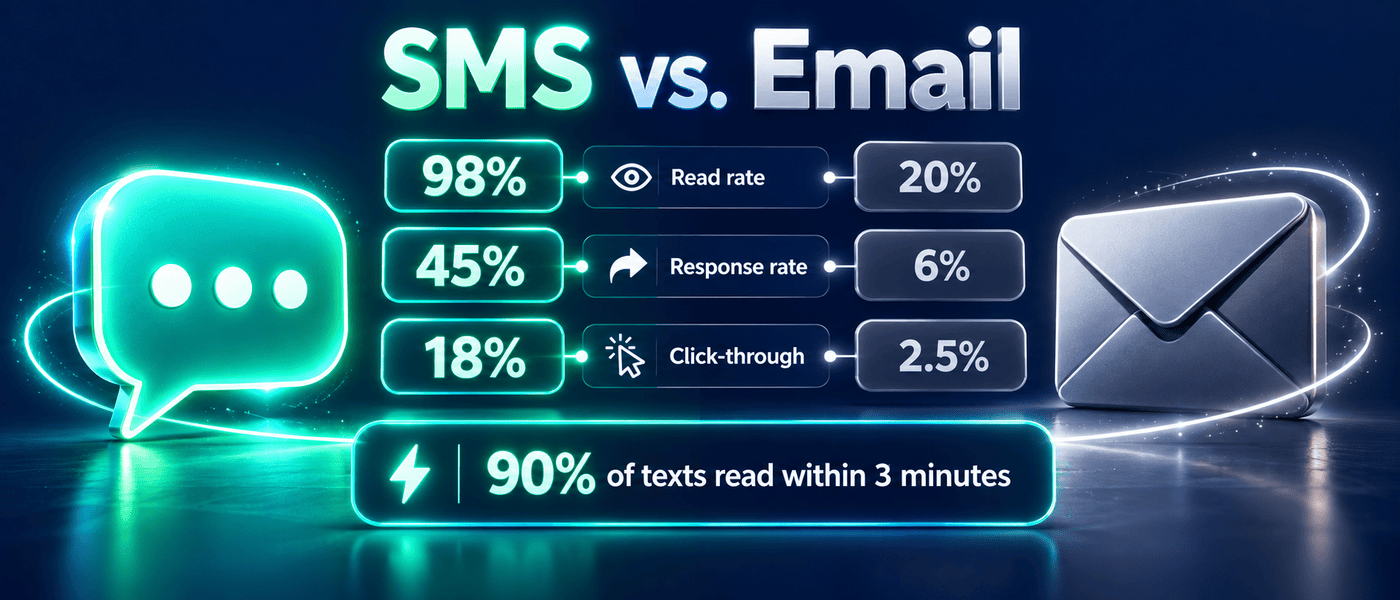
A campaign cannot perform if customers never see it. SMS gives businesses unusually reliable visibility, with reported read rates approaching 98% and 90% of texts read within three minutes. That speed is valuable when timing affects the outcome, such as during a limited promotion or before an appointment.
With EZ Texting’s text message automation, businesses can schedule campaigns for the times subscribers are most likely to check their phones. No need to rely on an inbox that consumers only occasionally visit, since SMS puts the message in front of them while it can still shape their next decision.
Direct, Personal Communication
An SMS opt-in gives you access to the channel customers use for conversations with people they know. That proximity invites stronger attention and trust than a promotional email competing with dozens of other messages.
It also raises the standard for what a business sends. Treat subscribers as a high-value audience by using purchase history, preferences, or past engagement to make messages relevant. Generic ads and excessive sends can feel intrusive on a personal channel, but timely messages give customers a reason to stay subscribed.
Cost-Effectiveness and Strong ROI
SMS campaigns use a predictable pay-per-message model, with typical US sending costs ranging from one to five cents per text depending on the platform and campaign volume. That makes it easier for smaller businesses to control spending than channels where competitive bidding can push advertising costs higher.
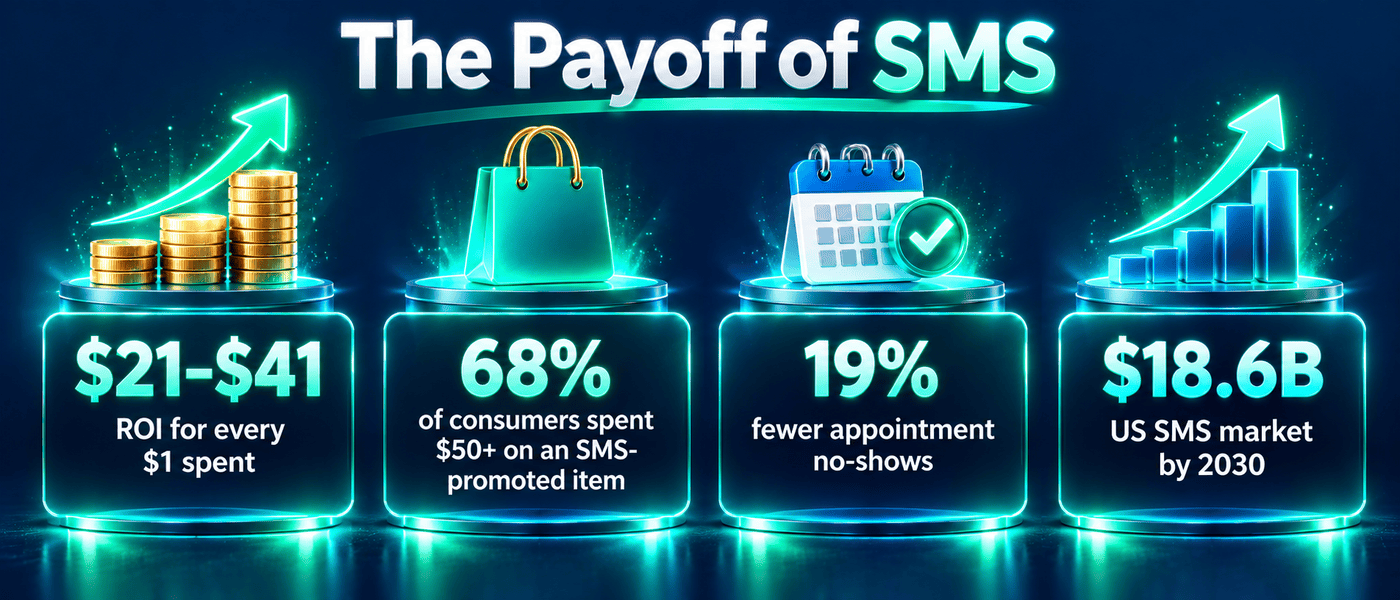
Industry estimates place SMS marketing ROI between $21 and $41 for every dollar spent, while surveyed businesses attribute 11% to 20% of their total revenue to the channel. Because businesses can start with a modest subscriber list, SMS can generate serious returns without requiring a large upfront investment.
Higher Engagement and Response Rates
SMS campaigns average a 45% response rate compared with about 6% for email. Click-through rates show a similar difference: SMS averages roughly 18%, while email averages 2.5%. For businesses, that can mean more traffic reaching an offer and more customers responding to each campaign.
EZ Texting’s two-way texting tools extend that engagement beyond the initial click. Customers can reply with a question, request help, or continue the conversation directly by text. Those exchanges help you remove purchase barriers and build stronger relationships while customer interest is still high.
Automation and Scalability
Automation lets a small business run a responsive SMS program practically on its own. In fact, 80% of businesses now use software to automate their SMS marketing.
A customer action or important date can trigger the right text automatically. A new subscriber might receive a welcome message, while an abandoned shopper gets a cart reminder. Once these campaigns are set up, they keep supporting revenue and customer service in the background, leaving marketers free to focus on strategy and new campaigns.
Versatility Across Campaign Types and Industries
SMS can support far more than limited-time promotions. Businesses use it to confirm appointments, share order updates, collect feedback, manage loyalty programs, and reconnect with customers who have stopped engaging.
Those uses translate across industries because most organizations have information that becomes less useful when customers see it late. A retailer can announce a restock while something like a nonprofit can quickly mobilize supporters around an event or urgent appeal.
SMS also works alongside email, social media, and in-person communication. Adding text to that mix gives customers another way to receive and respond to information rather than relying on a single channel to carry every message.
Measurable Performance and Clear Attribution
SMS generates concrete data after every send. Delivery rates show how much of the list is reachable, while clicks and replies reveal what prompted action. Opt-out trends can also flag messages that are too frequent or poorly targeted. Unlike RCS, standard SMS does not directly track opens, so you should prioritize the metrics the channel can reliably measure.
The pay-per-message model also keeps ROI calculations simple. Compare campaign cost with revenue tied to tracked links, promo codes, or recovered appointments. EZ Texting’s analytics dashboard helps businesses compare campaigns and identify the messages or audience segments producing the best results.
Compliance-Backed Trust
Every SMS subscriber has actively agreed to hear from the business. That permission creates a high-intent audience, with 10% of customers identifying SMS opt-ins as a way they demonstrate brand loyalty. Respecting that choice helps protect the attention that makes the channel valuable.
Businesses can reinforce trust by sending relevant messages at a reasonable frequency and making it easy to unsubscribe. EZ Texting has built-in compliance tools that help you with consent management and automatic opt-out processing. Send-time controls also help businesses avoid contacting subscribers during restricted hours.
How to Start Capturing the Full Value of SMS Marketing
Seventy-three percent of marketers plan to increase their SMS budgets to strengthen their programs. But how do you actually put an effective plan into motion?
Begin with a specific business problem instead of trying to launch a complete SMS program at once. A retailer might focus on abandoned carts, while a service business may start with appointment reminders. That choice gives the program a measurable purpose and helps determine which customers should be invited to subscribe.
Use contact management tools to organize subscribers by consent and relevant interests. Then automate the message tied to your priority use case. Once it is performing consistently, add campaigns that give subscribers a reason to stay engaged.
EZ Texting brings contact management, automation, and performance reporting into one platform, so smaller businesses can build on early results without technical expertise or a dedicated SMS staff.
See other related to Features:
See other related to Use Cases:
See other related to Topics:
