Is SMS Marketing Effective? The Data-Backed Answer for Small BusinessesView as Markdown
SMS boasts open rates up to 98% and response rates of 45%, but does that translate to real results? See the data behind SMS marketing effectiveness by industry, what drives stronger performance, and how to get more from your own campaigns.
- SMS marketing delivers exceptionally high open, click-through, and response rates to help businesses reach customers quickly and drive measurable action.
- Businesses using EZ Texting can track campaign performance, identify what resonates with subscribers, and refine future sends based on real engagement data.
The Performance Data: What the Numbers Say About SMS Marketing Effectiveness
SMS stands out because it performs well at each stage between delivery and customer action. Common industry benchmarks show a sizable advantage over email:
| Performance metric | SMS | |
|---|---|---|
| Open rate | Up to 98% | Around 20% |
| Response rate | 45% | 6% |
| Click-through rate | Around 18% | Around 2.5% |
The difference starts with visibility. SMS open rates commonly fall between 90% and 98%, while email messages must compete with crowded inboxes and spam filters. Speed strengthens that advantage: 90% of text messages are read within three minutes. A restaurant can promote a lunch special shortly before noon, for example, and reach customers while they are deciding where to eat.
SMS also turns attention into action. Its 45% response rate makes the channel well suited to appointment confirmations, feedback requests, and offers that invite a reply. An average click-through rate near 18% also gives businesses a direct path to product pages, booking forms, and other conversion-focused destinations.
That engagement can translate into meaningful business returns. Companies that text customers are 683% more likely to report digital marketing success than companies that do not. Estimates place SMS returns between $21 and $41 for every dollar spent, though actual ROI depends on campaign costs, audience quality, and attributed revenue. For eCommerce brands comparing SMS and email, revenue per message provides a more useful measurement than open rates alone because it shows how much each send actually produces.
Why SMS Marketing Is So Effective
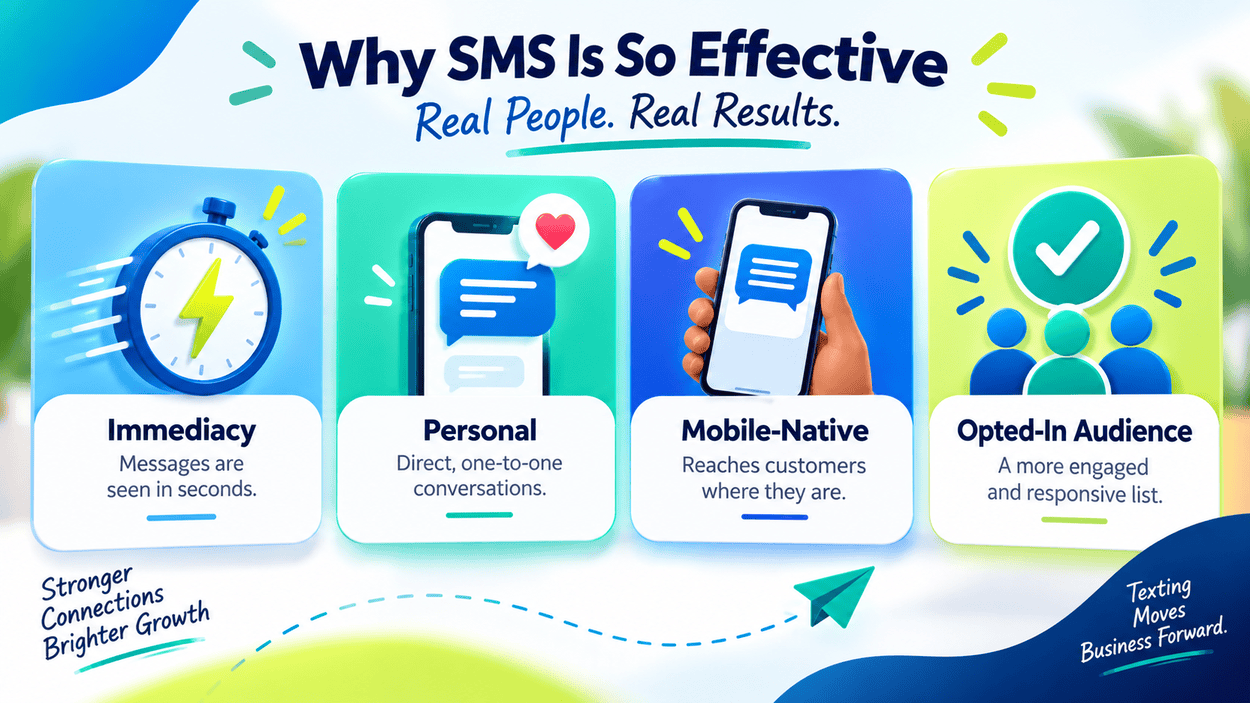
SMS reaches customers on a device they already check throughout the day. Its advantage comes from four qualities: speed, personal access, a mobile-native format, and an audience that has chosen to participate.
With open rates near 98% and response rates around 45%, SMS reaches and moves audiences in ways email and social rarely match.
Immediacy and Real-Time Reach
Eighty-one percent of consumers check their text messages within five minutes of receiving them. That quick attention makes SMS particularly useful for communications with a narrow window, such as expiring offers, event updates, and schedule changes.
Businesses can prepare time-sensitive campaigns in advance with EZ Texting’s text message automation. Scheduling each send around the relevant moment helps the message reach customers while they can still act on it.
Personal Delivery to a Trusted Channel
When customers join an SMS list, they invite a business into the same channel they use to communicate with people they know. Because messages show up in a personal inbox, you aren’t competing with a steady stream of promotional emails.
It’s a great indicator of interest and loyalty, 10% of customers demonstrate brand loyalty by opting into an SMS program. That trust also comes with higher expectations. Twenty-three percent of consumers say they would stop supporting a brand that sends too many messages, so businesses must treat each send as an opportunity worth the interruption.
Mobile-Native Format
Mobile devices generate 60% of global web traffic, and more than 90% of consumers text every day. SMS fits those existing habits by letting recipients read a message and follow its link without opening another app or switching devices.
Marketers now allocate about 64% of their digital advertising budgets to mobile. SMS gives businesses a direct place within that environment without depending on social media algorithms or competing for attention among app notifications.
An Opted-In, High-Intent Audience
Because permission is so important when it comes to SMS communication, you are naturally connected to a willing audience. Subscribers have actively requested communication, and 91% of consumers say they would opt in to brand texts if the messages improved their experience. Delivering on that expectation starts with knowing who has subscribed and what they want to receive. EZ Texting’s contact management tools help businesses organize subscribers and maintain accurate opt-in records as their lists grow.
What Makes SMS Marketing More or Less Effective
SMS benchmarks show what the channel can accomplish, but execution determines what an individual business achieves. Message relevance, campaign timing, and list quality all influence engagement and conversions.
Message Relevance and Personalization
Seventy-five percent of consumers prefer promotional content via SMS over other channels, but only when those texts feel useful. Generic promotions sent repeatedly to the entire list can quickly lose their appeal.
Segmentation helps businesses match messages to subscriber interests, purchase history, or past engagement. With EZ Texting’s segmentation tools, a retailer could send a back-in-stock alert to interested shoppers who, backed by data, will care more and have higher conversion rates than every contact your brand has.
Send Timing and Frequency
Frequency is not necessarily the problem. Fifty-eight percent of consumers are open to receiving brand texts several times per week when those messages are timely, useful, and personalized.
The right schedule depends on the audience and campaign. You can review previous campaign analytics to identify which days, times, and sending frequencies generate the strongest engagement.
List Quality and Consent
A clean, opted-in list gives every SMS campaign a stronger starting point. Messages sent to disengaged or non-consenting contacts can increase opt-outs, hurt deliverability, and create compliance risks.
Regular list maintenance keeps performance data focused on active subscribers. Businesses should honor opt-out requests promptly, remove bounced numbers, and review contacts that consistently show no engagement. A smaller list of willing participants is more valuable than a larger one filled with inactive contacts.
SMS Marketing Effectiveness by Industry
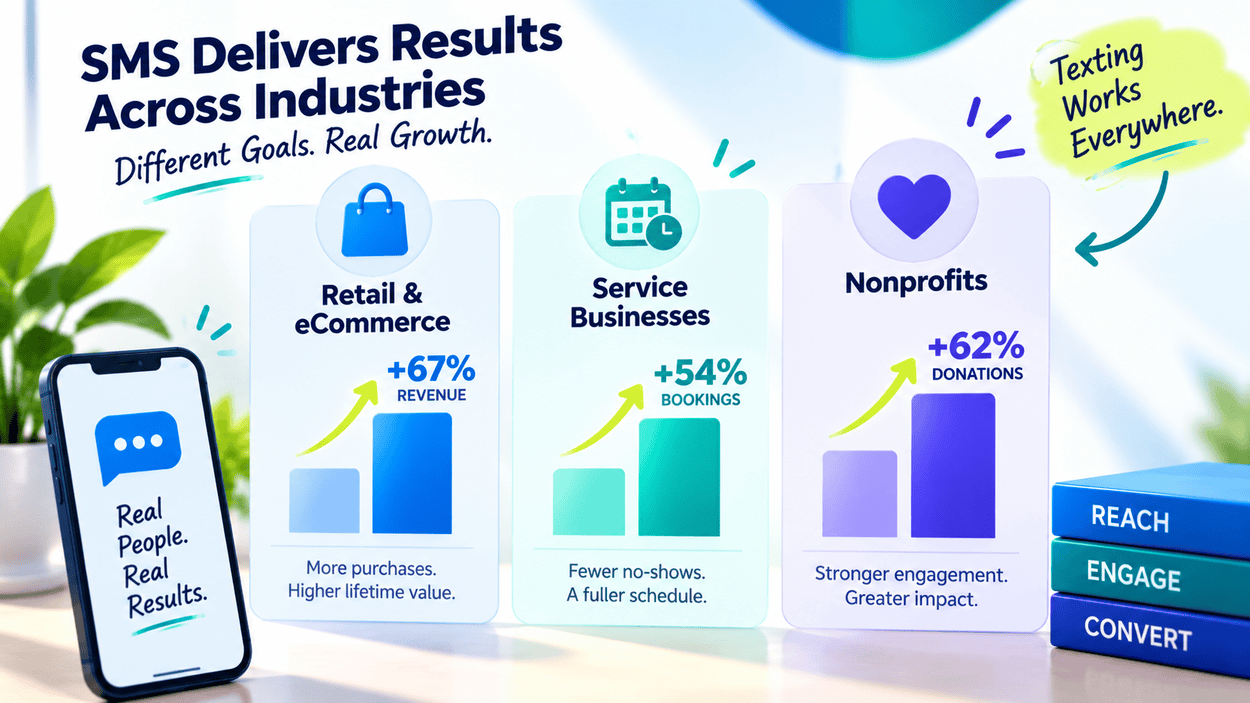
SMS can work across nearly any industry, but its strongest use cases depend on how customers interact with the business. The most effective messages usually connect to an immediate need, timely update, or clear next step.
Retail and eCommerce
Retail and eCommerce businesses can reach shoppers when purchase intent is already high. Flash sale announcements, back-in-stock alerts, abandoned cart reminders, and shipping updates all provide information customers can use right away.
SMS can also support purchases beyond low-cost impulse buys. Sixty-eight percent of consumers have spent more than $50 on items promoted through text messages, which shows just how much potential this channel has to influence higher-value orders.
Service Businesses
For healthcare providers, salons, home service companies, and fitness studios, SMS is particularly effective for managing appointments. Timely appointment reminders and booking confirmations can reduce no-shows by giving customers a quick way to confirm or reschedule.
The 45% response rate for SMS, compared with 6% for email, is especially valuable here. A fast reply can help a business refill an opening, adjust its schedule, and protect revenue that might otherwise be lost.
Nonprofits and Community Organizations
Nonprofits often compete with dozens of other organizations for attention in supporters’ email inboxes. SMS offers a more visible channel, with open rates reaching as high as 98%.
Organizations can use texts for donation appeals, volunteer updates, event reminders, and urgent community notices. Each message should give supporters one clear action, such as completing a donation or confirming attendance, so they can respond without sorting through a lengthy explanation.
How to Maximize SMS Marketing Effectiveness
Better results come from treating each campaign as part of an evolving program. Focus on attracting interested subscribers, tailoring messages to them, and using performance data to guide the next send.
Build a High-Quality Subscriber List
Give people a clear reason to subscribe. An immediate incentive, such as a discount, early access, or useful exclusive content, attracts contacts who already have an interest in what your business offers.
Set accurate expectations at sign-up by explaining what subscribers will receive and how often you plan to text. Then promote the opt-in through places where engaged customers already interact with your business, such as your website, checkout page, social profiles, or physical location.
Segment and Personalize Every Campaign
Divide your list according to details that change what someone is likely to want. Purchase history, location, interests, and customer status can all support more relevant campaigns.
Segmentation does not need to be complicated. Separating new subscribers, repeat buyers, and VIP members gives you enough information to adjust the offer and call to action. A welcome discount may suit a new contact, while early access could provide more value to a loyal customer.
Test and Optimize Continuously
Testing replaces assumptions with evidence from your own audience. Compare one campaign element at a time, such as the message format, send time, offer, or call to action. Changing a single variable makes it easier to identify what affected performance.
After each campaign, review click-through rates, responses, opt-outs, and revenue per message. Open rates can show whether recipients saw the text, but downstream actions reveal whether it accomplished its goal. Apply what you find to future campaigns so each test contributes to stronger results over time.
Start Getting Better Results from SMS Marketing
SMS marketing is effective because it reaches an interested audience quickly and makes the next step easy. Strong performance, however, comes from more than sending texts. Businesses get better results when they maintain a healthy subscriber list, match each message to the right recipients, and use campaign data to improve future sends.
EZ Texting brings those pieces into one platform, with tools for contact management, segmentation, automation, and performance reporting. Start a free trial to create targeted campaigns, track how customers respond, and build an SMS program around measurable results.
Frequently Asked Questions About SMS Marketing Effectiveness
SMS reaches people who have already opted in, while social media advertising often targets a wider audience based on interests or behavior. Texting typically offers greater visibility and more direct measurement. Social media is better suited to generating awareness and attracting new prospects, while SMS helps businesses reengage known customers and prompt an immediate response.
Businesses can see clicks, replies, and purchases within minutes of sending a campaign, particularly when the message includes a time-sensitive offer. Long-term results take more time to assess. Tracking several campaigns provides a more reliable view of subscriber behavior, preferred send times, and the messages that produce the most revenue.
Yes. B2B companies can use SMS for appointment reminders, event updates, lead follow-ups, and important account notifications. The channel works best for concise, timely communication rather than complex sales explanations. Businesses should reserve texts for information that provides immediate value and use email or calls when a topic requires more detail.
It can decline if messages become repetitive, irrelevant, or too frequent. Subscriber fatigue is less likely when texts reflect customer interests and provide a worthwhile reason to engage. Monitor click-through, response, and opt-out rates over time. A downward trend may signal that you need to adjust the content or campaign schedule.
A small, engaged list can produce meaningful results because SMS performance depends more on subscriber interest than total audience size. Businesses can evaluate success through conversions, appointments, purchases, or revenue per message rather than focusing only on reach. Starting small also makes it easier to test campaigns and learn what subscribers respond to before growing the list.
See other related to Features:
See other related to Use Cases:
See other related to Topics: