SMS Marketing Best Practices: How to Run Campaigns That Get ResultsView as Markdown

SMS gives you direct access to customers who read texts within minutes, but that access comes with responsibility. Get the best practices for opt-in consent, compliance, segmentation, timing, and more.

A smiling shop owner reads a business text on her phone in a warm, plant-filled pottery studio, with 'Your order's ready for pickup' and 'Reply YES to confirm' message bubbles beside her.
Key Takeaways
  • Strong SMS programs start with clear opt-in consent, consistent compliance practices, and a subscriber list made up of people who genuinely want to hear from you.
  • Segmentation, personalization, concise copy, and well-timed sends help make each message more relevant and easier for recipients to act on.
  • Ongoing testing, performance tracking, list maintenance, and easy opt-outs help you improve campaign results while protecting long-term engagement.

Why SMS Marketing Best Practices Matter

Text messaging gives businesses direct access to a channel customers already use throughout the day. According to Pew Research Center, 98% of U.S. adults own a cellphone. EZ Texting’s 2026 Consumer Texting Behavior Report found that 89% of consumers have signed up to receive texts from at least one business, while 87% will read a new text within 15 minutes of receiving it.

That level of access creates opportunity, but it also raises the standard for every message you send. Following SMS marketing best practices around permission, relevance, timing, message quality, and measurement helps you use the channel without exhausting the audience you worked to build.

Here, we discuss the strategic and practical steps you can take to build stronger SMS campaigns.

Here, we discuss the strategic and practical steps you can take to build stronger SMS campaigns.

Start with Explicit Opt-In Consent

Before you take any steps to improve your approach to SMS marketing, you first need to address opt-in consent. The Telephone Consumer Protection Act (TCPA) and related FCC rules establish consent requirements for certain marketing calls and texts. These state that you need to obtain clear, documented permission before adding someone to a promotional SMS list.

You can collect SMS opt-ins through several common touchpoints:

  • Website forms and pop-ups
  • Checkout or account-creation opt-ins
  • Loyalty program enrollment
  • Mobile app prompts
  • In-store signage, packaging, receipts, or event materials that direct customers to text a keyword

Whatever method you use, the disclosure should identify your business, explain the types of messages the subscriber can expect, and avoid treating a phone number provided for another purpose as automatic permission to send marketing texts. Consumers must be able to revoke consent through reasonable means, so every opt-in process also includes options for revoking permission at a later time, as a way to stop receiving messages.

Give Customers a Reason to Opt In

Interest in business texting is already high. Our 2026 Consumer Texting Behavior Report shows that 62% of consumers are willing to opt in before making their first purchase, up from 49% in 2023. Giving subscribers a clear reason to join, such as discounts, order updates, appointment reminders, or loyalty benefits, helps attract people who actually want to hear from you. That gives your business a more qualified audience and reduces wasted effort on contacts who are unlikely to engage.

Understand and Follow SMS Marketing Regulations

Opt-in consent is the first compliance checkpoint, but your responsibilities continue after someone joins your list. Key laws and industry standards to understand include:

  • TCPA and FCC rules: The TCPA and related FCC regulations establish requirements for certain telemarketing texts, including applicable consent standards and consumers’ ability to revoke consent through reasonable methods. FCC rules recognize replies such as “STOP,” “CANCEL,” and “UNSUBSCRIBE” as valid ways to revoke consent in covered situations. Federal rules also establish an 8 a.m. to 9 p.m. local-time window for telephone solicitations, although state requirements may be stricter.
  • State telemarketing and privacy laws: Federal requirements are only part of the compliance picture. Some states impose additional restrictions involving sending hours, registration, consent, recordkeeping, or other telemarketing practices. If you message customers across multiple states, your compliance process should account for the recipient’s location rather than relying on one national standard.
  • GDPR and the EU ePrivacy Directive: Businesses messaging customers in the European Union also need to account for data-protection and electronic-marketing requirements. The EU ePrivacy Directive specifically addresses SMS and generally requires prior consent for electronic direct marketing, subject to limited exceptions for certain existing customer relationships. GDPR requirements also affect how subscriber data is collected, stored, and processed.
  • CTIA Messaging Principles and Best Practices:CTIA guidance is not law, but it provides important industry standards for commercial messaging. Its recommendations cover areas such as campaign-specific opt-ins, opt-out handling, record maintenance, privacy, and the use of subscriber lists. Following these standards can also help reduce carrier filtering and other deliverability problems.
  • CAN-SPAM Act: CAN-SPAM is often mentioned alongside SMS regulations, but its role is more limited. The FTC explains that the law generally does not cover standard phone-to-phone text messages, although it can apply to certain commercial messages sent to wireless domains..

Because these requirements can change and vary by location, building compliance controls into your normal workflow is more efficient than checking campaigns manually each time. EZ Texting provides built-in compliance support, including consumer-driven consent features and automated opt-out capabilities, to help businesses apply these requirements more consistently.

Build and Maintain a High-Quality SMS Subscriber List

Once subscribers have opted in, the focus shifts to keeping that audience accurate, active, and useful. A high-quality list is made up of contacts who have valid numbers, continue to show interest, and receive messages that match their expectations. Maintaining that standard helps improve campaign performance while reducing wasted sends, deliverability issues, and unnecessary opt-outs.
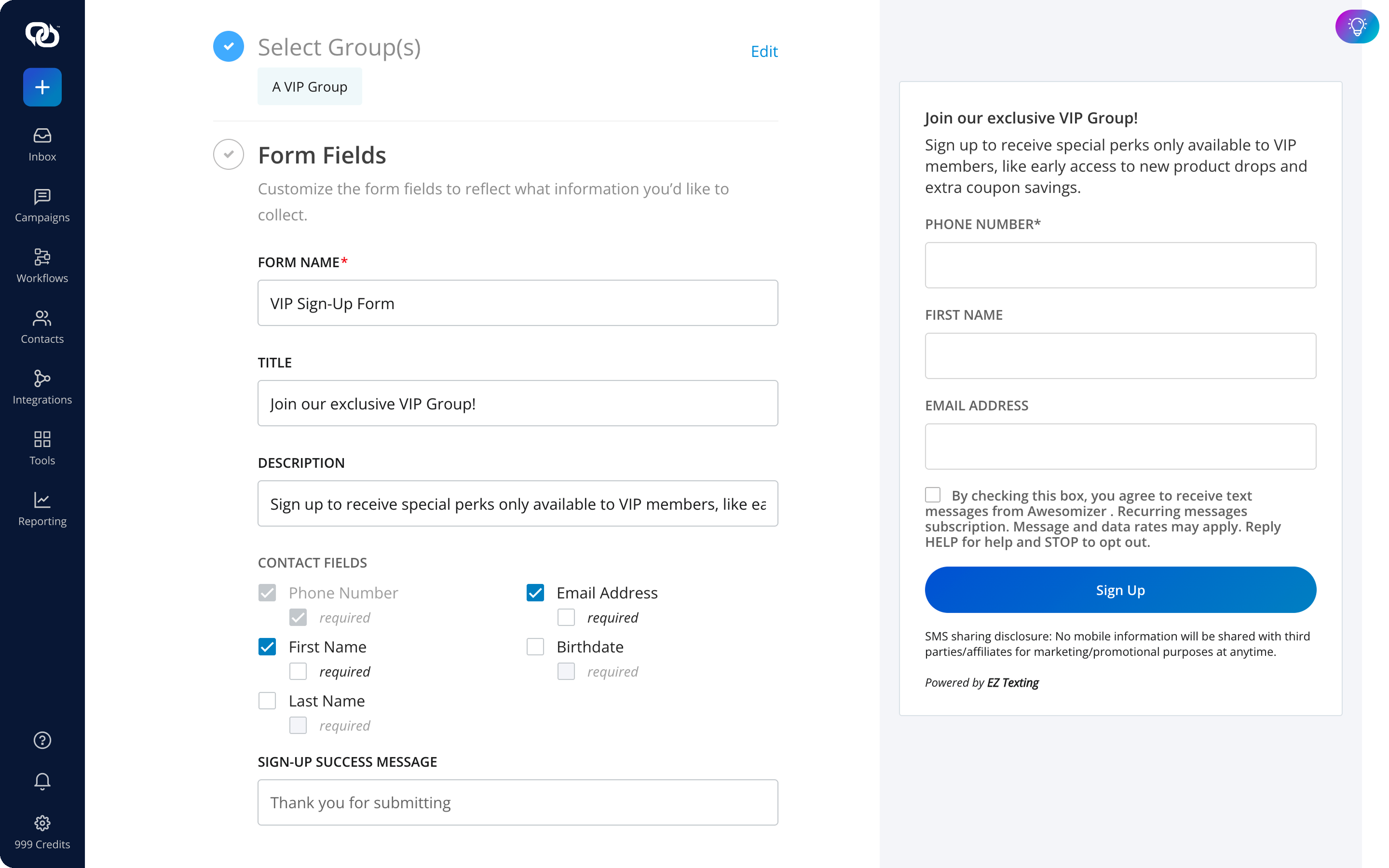
EZ Texting sign-up form builder for collecting SMS opt-ins from website visitors

Sign-up forms capture opt-ins with clear, documented consent, so new subscribers join your list the compliant way.

Effective Opt-In Collection Strategies

Use multiple sign-up points so customers can join your list wherever they are most likely to interact with your business. Website forms can capture online visitors, while keywords and QR codes can extend enrollment to stores, events, packaging, receipts, and other offline touchpoints.

Keep the consent language consistent across each method so subscribers understand what they are signing up for regardless of where they join.

Keeping Your List Clean and Engaged

Keeping your list healthy means acting on what your campaign data tells you. Remove invalid or repeatedly bounced numbers, process opt-outs immediately, and separate chronically unresponsive contacts from active subscribers so they are not receiving the same volume of messages.

For formerly engaged contacts who have stopped clicking, replying, or converting, consider a dedicated SMS re-engagement or retention strategy. Introduce a different offer, message type, or delivery cadence. If they remain inactive after that effort, reduce or pause promotional sends to that group. This keeps your list more responsive and gives you cleaner performance data to work from.

Segment Your Audience for Relevant Messaging

Segmentation means grouping subscribers based on information that can change what you send them, such as location, purchase history, loyalty status, interests, recent activity, or communication preferences. Understanding and categorizing these different groups allows you to create messaging uniquely tailored to their needs and interests (rather than sending the same message to everyone).
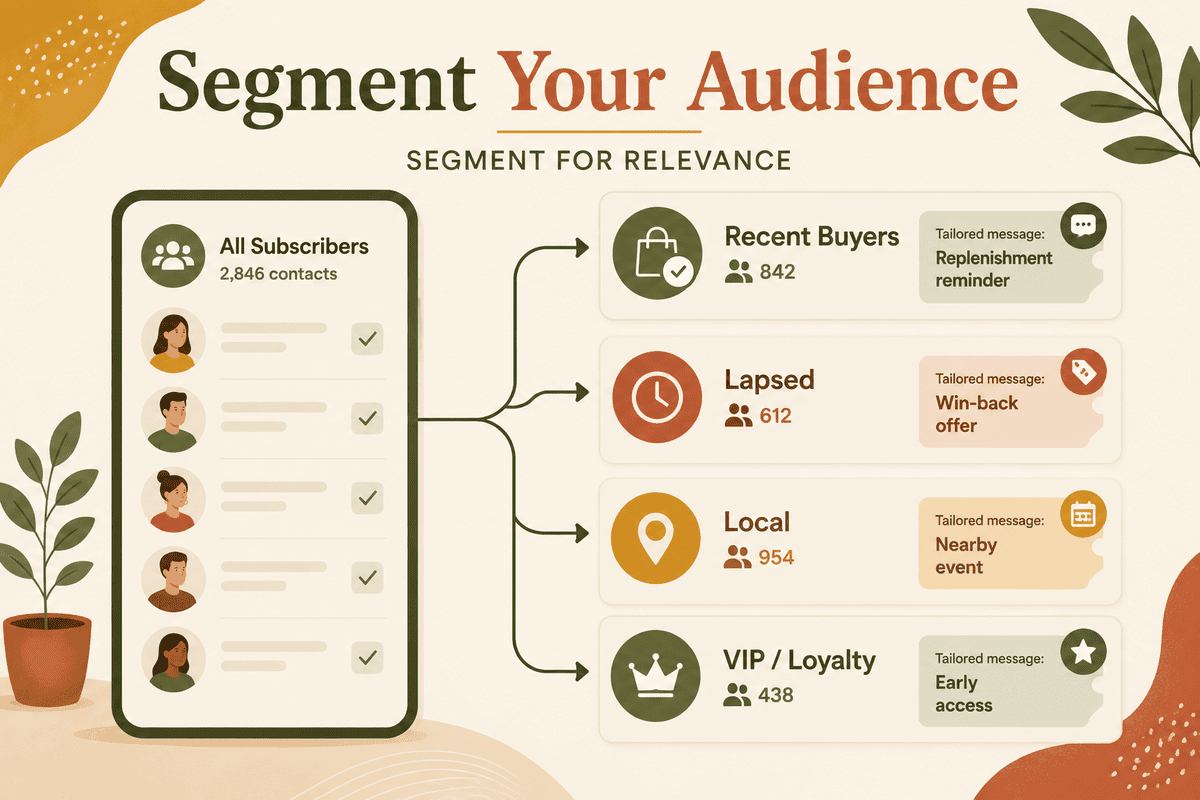
A subscriber list of 2,846 contacts split into four segments, recent buyers, lapsed, local, and VIP or loyalty, each getting a tailored message

Group subscribers by behavior and status, then send each segment a message built for them.

Build Segments Around Customer Behavior

Begin with groups that reflect meaningful differences in customer behavior or context:

  • Recent buyers: Send product follow-ups, replenishment reminders, or related recommendations.
  • Lapsed customers: Use re-engagement offers or reminders designed to bring them back.
  • Location-based groups: Limit event announcements, store promotions, or regional updates to nearby subscribers.
  • Loyalty or VIP customers: Share early access, member benefits, or offers tied to their status.
EZ Texting

EZ Texting contact management tools make it easier to organize subscribers into relevant groups and target each campaign accordingly. Consumer preferences support this kind of targeted approach. 2026 consumer texting behavior research suggests that only 9% of respondents preferred generic messages, while 51% valued discounts or offers based on their interests and 45% valued reminders tailored to their appointments, orders, or activities.

Craft Clear, Concise, and Compelling Messages

One of the biggest advantages of SMS, the fact that it’s direct and brief, is also one of its major limitations. SMS gives you only a small amount of space and very little time to explain your point. As such, effective messages identify the sender, communicate the reason for the text quickly, and make the next action obvious.
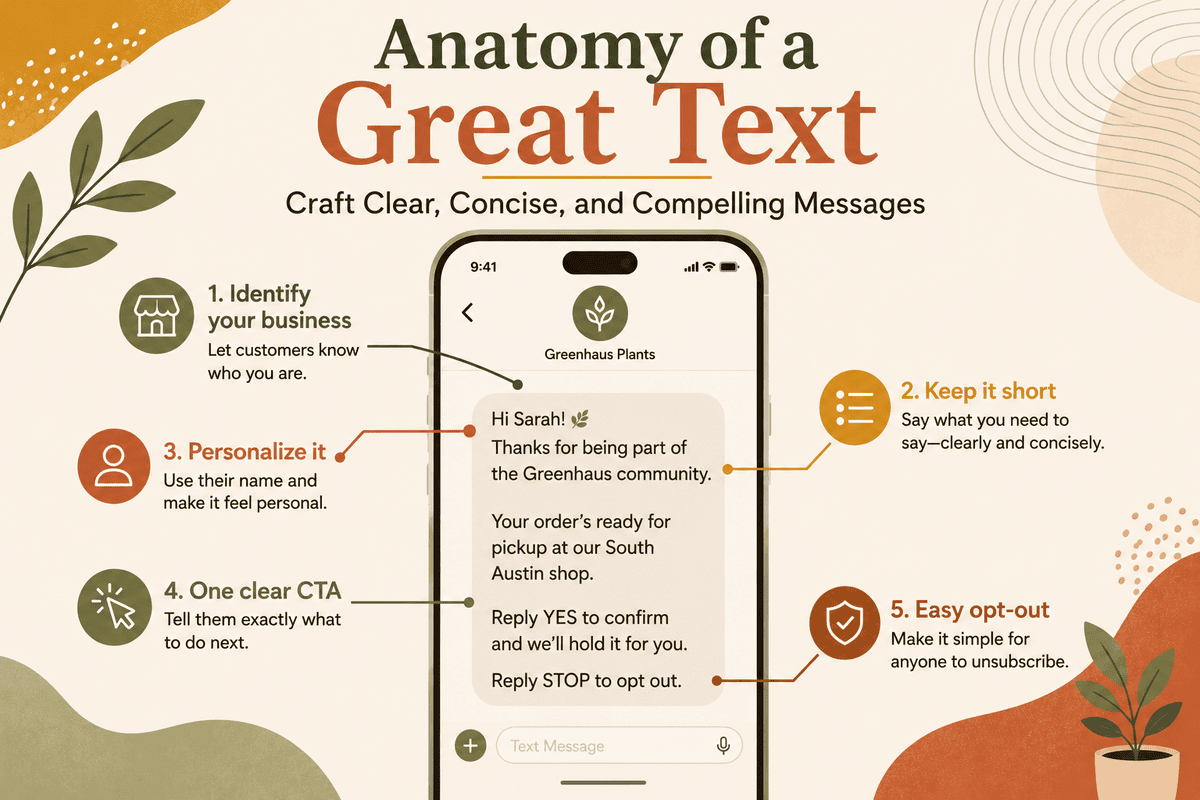
Anatomy of a great business text: identify your business, keep it short, personalize it, use one clear CTA, and make opt-out easy

The parts of a high-performing text: a clear sender, short copy, a personal touch, one CTA, and an easy opt-out.

Avoid packing multiple offers or unrelated announcements into one send. If you are promoting a sale, focus on that sale. If you need an appointment confirmed, keep the message centered on confirmation. If you try to cover too much at once, the main point can get buried and the next step becomes less obvious.

Keep It Short and Focused

A standard SMS segment supports up to 160 GSM characters (although encoding and certain characters can reduce that limit). Longer texts may be split into multiple segments, which can affect readability and increase messaging costs.

To keep things direct and on point, lead with the information the recipient needs most. A promotional text might include the offer and expiration first, followed by a link. A reminder should share the date or deadline immediately.

Images can also support certain promotions when plain text cannot communicate the offer as effectively. Unlike SMS, which is primarily text-based, MMS allows you to include media such as images, GIFs, or video alongside the message. In EZ Texting’s 2026 survey, 64% of consumers said they were more likely to click or purchase when a promotional text included an image. For campaigns where product visuals genuinely help, MMS may be worth testing.

Personalize Every Message

SMS personalization involves using customer information to change the content of the message itself. Instead of only adding a first name, tailor the text based on details such as what the customer purchased, where they are located, their loyalty status, or the products and services they have shown interest in. Consider a pet supply retailer with customers who buy different types of food. A replenishment message tied to a recent dog-food purchase is useful to that buyer. Sending the same reminder to every subscriber creates unnecessary noise.

Just be sure to use customer data selectively. Personalization should make the message easier to act on without giving recipients the impression that your business is using information they did not expect you to have.

Write Strong Calls to Action

Every marketing text should point to one unambiguous next step. Use direct CTA language that tells recipients exactly what to do, such as:

  • “Shop now”
  • “Reply YES to confirm”
  • “Claim your offer”
  • “Tap to book”

Make sure the destination supports that action. A product CTA should lead to the associated product or offer rather than a general homepage. Booking links should open to a mobile-friendly scheduling experience. If you need a starting point for different campaign types, SMS marketing templates provide examples you can adapt to your own goals and audience.

Automation extends the interaction after the initial send. Follow-up messages can be triggered by customer actions or timing, allowing sequences to respond to specific recipient behavior.

Send at the Right Time and Right Frequency

A useful message can still underperform if it arrives when the recipient cannot act on it. Too much volume creates a different problem: subscribers begin treating your texts as background noise or leave the list altogether.
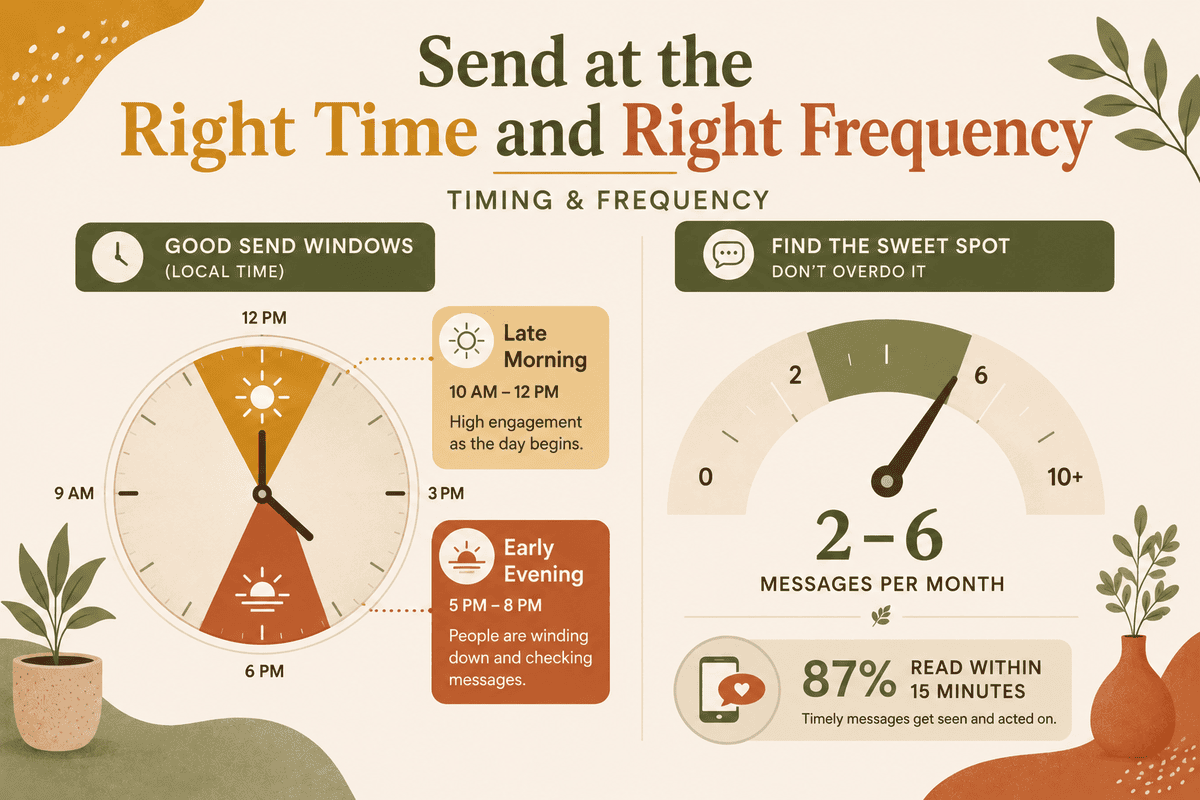
SMS timing and frequency guide: good send windows are late morning and early evening, with a sweet spot of two to six messages per month

Send in the late-morning or early-evening window, and keep it to about two to six messages a month.

Timing Best Practices

Schedule promotional texts during reasonable daytime or early-evening hours in the recipient’s local time zone. Federal rules generally allow telephone solicitations between 8 a.m. and 9 p.m., but some states have stricter limits. Choose the actual send time based on what the message is asking the recipient to do: a lunch offer should arrive before lunch plans are set, while an appointment reminder should leave enough time to confirm or reschedule.

Eighty-seven percent of consumers report reading a text within 15 minutes. That speed makes timing especially important for limited offers, reminders, event communications, and time-sensitive updates.

Frequency Best Practices

There is no universal sending cadence that works for every audience. A range of 2 – 6 messages per month is a good starting point for many small and midsize businesses, but subscriber behavior should determine whether you increase or reduce that volume.

Message volume can have a direct effect on retention. In our 2026 Consumer Texting Behavior Report, 40% of consumers said they would opt out if a business texted too frequently. The same report found a growing preference for lower message volume compared with the prior year.

That said, seasonal campaigns may justify a temporary increase. If you send more frequently around a holiday or major promotion, monitor unsubscribes and engagement so you can identify when additional volume stops producing useful results.

Always Include a Clear Opt-Out Option

Giving subscribers an easy way to leave your list is part of running a compliant SMS program and maintaining trust with recipients. Marketing texts should include an instruction such as “Reply STOP to unsubscribe,” and opt-out requests should be processed promptly. Forty-seven percent of consumers feel more confident receiving business texts when they know they can unsubscribe without too much effort.

Review opt-out data by campaign instead of treating each unsubscribe as an isolated event. A sudden increase can point to excessive frequency, weak targeting, an offer that did not match subscriber expectations, or a change in your messaging approach. That feedback can help you correct the underlying issue before the next send.

Test, Measure, and Optimize Continuously

Use campaign data to decide what to adjust in future sends. Test one variable at a time, such as the CTA, send time, offer, or audience segment, so you can better recognize what is affecting performance.
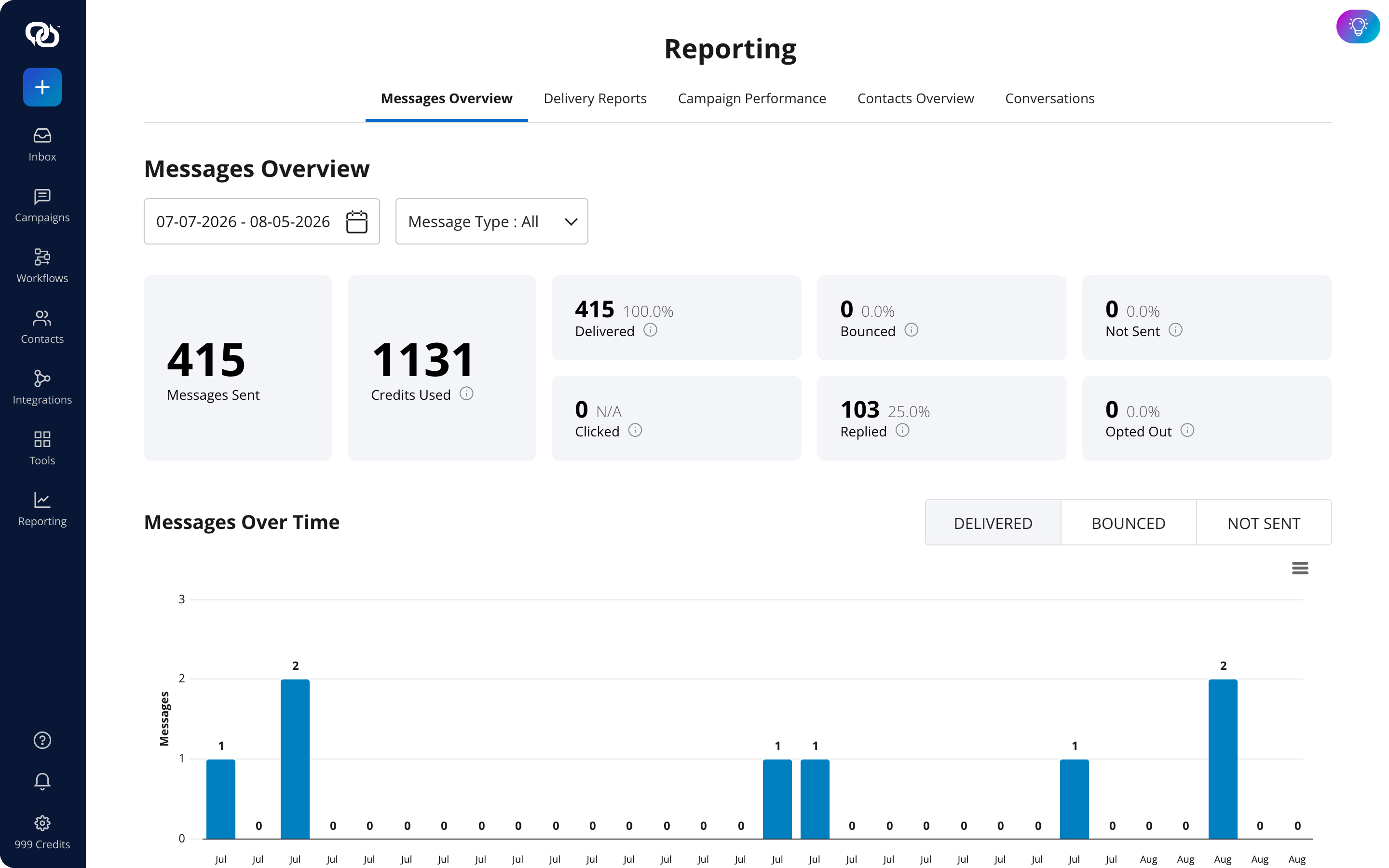
EZ Texting reporting dashboard showing delivery, click-through, and opt-out metrics for a text campaign

Reporting shows delivery, clicks, and opt-outs, so you can see what worked and improve the next send.

For example, you might test:

  • Calls to action: Compare different wording to see which prompt drives more clicks or replies.
  • Send times: Test different delivery windows to identify when your audience is most responsive.
  • Offers: Compare discounts, free shipping, early access, or other incentives.
  • Audience segments: Send similar campaigns to different groups to see where the message generates the strongest response.

Changing one variable at a time helps isolate the cause and effect in your results. If you change the offer, CTA, audience, and timing all at once, you will have a harder time identifying what actually affected performance.

Common SMS Marketing Mistakes to Avoid

Even a well-established SMS program can lose effectiveness if basic practices start to slip. Several common mistakes are especially likely to increase opt-outs or reduce engagement.

  • Sending too often: More messages do not automatically produce better results. If engagement falls while opt-outs rise, reduce the volume and reassess what each send is contributing.
  • Sending messages without a clear benefit: Every text should give the recipient a useful reason to read it, whether that is an offer, reminder, update, or relevant piece of information.
  • Sending the same message to everyone: Broad blasts can ignore important differences in location, purchase history, interests, or customer status. Even simple segmentation can make the content more applicable to the person receiving it.
  • Including too many actions: Multiple links or competing requests make it harder for recipients to understand what you want them to do. Choose one main action for each message.
  • Ignoring campaign results: Repeating the same message format or schedule without reviewing performance prevents you from learning what your audience actually responds to.
  • Inviting replies without handling them: If you ask customers to respond, make sure someone or an automated workflow can manage those responses appropriately.

A simple pre-send review can catch many of these problems. Confirm who should receive the message, why they should care about it, when it will arrive, and what you want them to do next.

Start Running Smarter SMS Campaigns Today

Following SMS marketing best practices gives you a practical framework for improving each part of your program. Consent protects the foundation of your list, segmentation helps you send more relevant messages, and ongoing testing shows you where adjustments can improve results.

The platform you use can make those practices easier to apply. EZ Texting brings contact management, bulk SMS and MMS, automation, keywords, reporting, and compliance support into one system, helping businesses manage campaigns without adding unnecessary complexity.

Ready to put these practices to work? Start your free trial and see how EZ Texting can help you build more targeted, measurable SMS campaigns.

Frequently Asked Questions About SMS Marketing Best Practices

SMS is primarily text-based, while MMS supports images, GIFs, and video. Use SMS for concise updates and reminders, and consider MMS when visuals add useful context to a promotion.

Use clearly disclosed website forms, checkout opt-ins, loyalty sign-ups, app prompts, keywords, or QR codes. Subscribers should understand what they are agreeing to receive before providing consent.

The right number type depends on your messaging volume, use case, and carrier requirements. An SMS provider can help you choose an option that supports your campaigns and applicable registration requirements.

Segmentation helps you send each campaign to subscribers whose behavior, location, interests, or customer status make the message relevant, reducing unnecessary sends and improving the quality of your targeting.

Identify your business, confirm the subscription, deliver any promised offer or benefit, and include required disclosures and opt-out instructions so the subscriber understands what to expect.

Watch delivery rates, clicks, replies, conversions, and opt-outs. Declining engagement or rising unsubscribes can indicate problems with message frequency, targeting, timing, or content.

14-DAY FREE TRIAL
Take EZ Texting for a Spin
The easiest way to add SMS to your business. No credit card required.
1,000+ five-star reviews

Join the 230,000+ Who Have Used EZ Texting to Connect with Their Audiences.