Reasons for Cart Abandonment: What's Really Driving Shoppers Away and How to Win Them Back
More than 70% of online carts never convert. Learn the real reasons for cart abandonment and how an automated text sequence brings shoppers back before a competitor does.


- Cart abandonment often comes down to purchase intent, unexpected costs, trust concerns, or checkout friction.
- Your checkout data can show where shoppers leave and help you identify what may be stopping the sale.
- Abandoned cart texts give opted-in shoppers a quick way to return to their purchase.
- Track recovered carts and revenue to see how much your abandoned cart texts are contributing to sales.
The Five Friction Points Behind Every Abandoned Cart
Shoppers can leave carts for all kinds of different reasons, so the same recovery tactic won’t work for every abandoned purchase. Here, we dissect some of the most common reasons for cart abandonment and find more compelling ways to connect with your consumers.
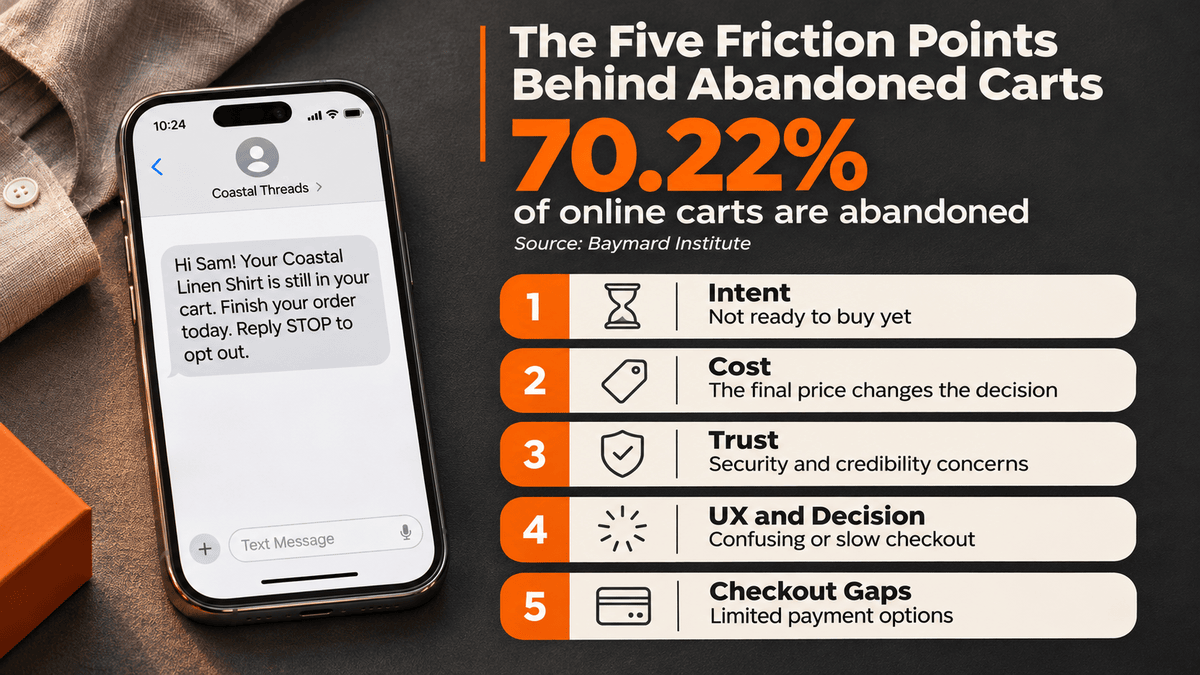
Intent Friction: Shoppers Who Weren't Ready to Buy Yet
Sometimes there isn’t a checkout problem to fix. Plenty of shoppers add products to their carts before they’ve decided to buy. They might be:
- Comparing prices with another retailer
- Saving an item to revisit later
- Thinking over a purchase before committing
- Browsing with no immediate plans to buy
Watch your recovery data over time for signs that you have a browsing-heavy audience. If shoppers frequently open your recovery texts but rarely click back to their carts, many may simply not be ready to buy. If they click back at a healthy rate but still don’t complete checkout, that points to another problem further along the purchase process. When shoppers just aren’t ready to buy, a reminder text may be enough to bring some of them back.
Cost Friction: When the Final Price Changes the Decision
The price a shopper sees on a product page or an ad doesn’t always exactly match the price they see at checkout. Shipping charges, taxes, fees, or other costs can push the total beyond what they expected to spend.
Cost can also become an issue when shoppers compare the purchase against other options. They may find a better price elsewhere, decide the product isn’t worth the total cost, or simply need more time to think about a larger purchase.
Pay attention to where along the line shoppers leave. If shipping is the sticking point, show estimated costs earlier or make your free-shipping threshold easier to find. If higher-value carts are abandoned more often, payment options or financing may be worth highlighting on your site. And if fees only appear at the final step, introduce them sooner so the total doesn’t come as a surprise.
A recovery text can still bring interested shoppers back, but fixing the source of repeated cost friction is actually addressing the root problem. If they still don’t buy, a later message could offer free shipping, a small discount, or another promotion that makes the total cost more appealing.
Trust Friction: Security and Credibility Concerns
Review the checkout process through the eyes of your potential customers. Is your business clearly identified? Are shipping and return policies easy to find? Does the offer or price they clicked on still match what appears in their cart? An unfamiliar payment page or a promotion that changes along the way begins flagging for customers.
Your ecommerce analytics can also show whether first-time shoppers abandon checkout more often than returning customers. If they do, look at where they tend to leave. Depending on what you find, you might:
- Add recognizable payment options and security indicators near the payment fields
- Make shipping, returns, and refund information easier to find before the final checkout step
- Carry discounts and promotional pricing consistently through the cart
- Add customer reviews or other relevant social proof near products that get plenty of interest but few completed orders
Recovery texts can help build credibility, too. Identify your business immediately and link shoppers directly back to their cart. Two-way texting also gives someone who is unsure about a product, return policy, or shipping details a chance to ask before they walk away for good.
UX and Decision Friction: Confusing or Slow Checkouts
A complicated checkout can lose shoppers who were otherwise ready to buy. Too many fields, forced account creation, confusing navigation, or poor mobile performance add extra work at the worst possible time.
Consider going through your own checkout on a phone and complete every step as if you were a customer. You could also have a test group try your checkout process and see what they think. This is when to note where you have to pause, re-enter information, zoom in, wait, or move backward to find something. Do you ever have to stop to try to figure out what to do next? Is the mobile experience just as smooth as the desktop one?
Once you’ve experienced it for yourself or gathered feedback from others, get to work on the checkout design and user experience. Cut unnecessary form fields, offer guest checkout when possible, make buttons easy to tap, and fix pages or payment screens that load slowly.
Checkout Optimization Gaps: Limited Payment and Cross-Sell Options
A lack of options at checkout can also cut a purchase short. A declined card can end the sale if there’s no convenient alternative, or missing digital wallets or other payment methods can create an unnecessary stopping point.
Look at how customers currently pay and where payment attempts fail. If you see demand for options you don’t offer, consider adding alternatives such as digital wallets, buy now, pay later services, or additional card options. For larger purchases, installment payments may also make the total more manageable.
Product recommendations can play a role here, too, but keep them relevant and easy to ignore. Some add-ons can increase the value of an order, but a crowded and overstimulating checkout full of unrelated offers can introduce another decision when the shopper is already trying to pay.
Building an Abandoned Cart Text Automation That Converts
A cart recovery workflow can run automatically once a shopper leaves an eligible cart. Decide when each message goes out, what it says, and how you’ll handle replies.
Timing: The Automated Recovery Window
Use a reminder 30 to 60 minutes after abandonment, while the product is still fresh in the shopper’s mind. If they don’t return, follow up with a message that addresses a likely concern based on what you know about the purchase.
Save a final text for 48 to 72 hours later. This is the better place to test free shipping or a discount, not immediately rewarding every abandoned cart with an offer.
Wording: Turning a Reminder Into a Sale
“Less is more” is often true when it comes to creating an abandoned cart SMS message. Each text should identify your business, mention what the shopper left behind, and link directly to the saved cart.
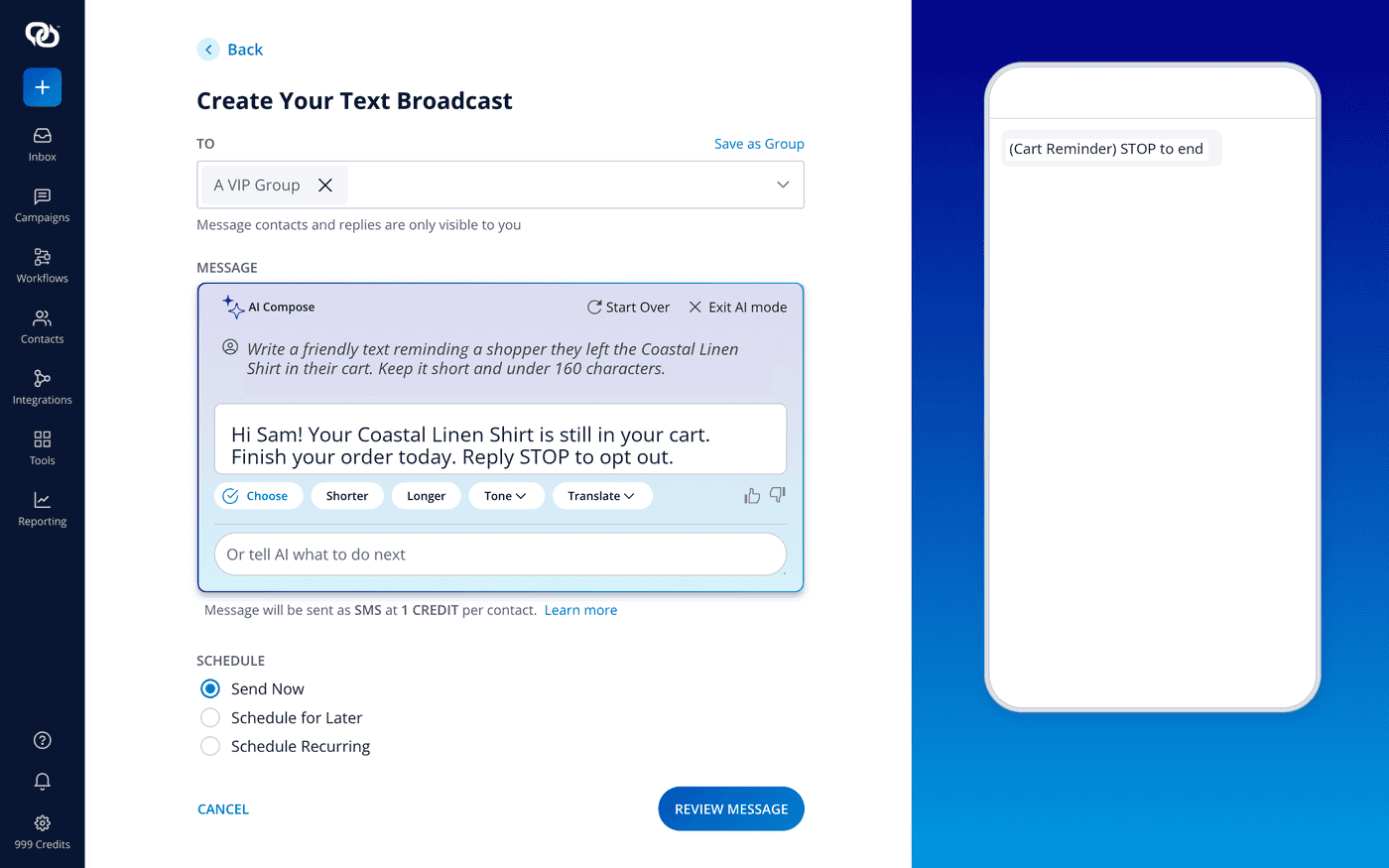
Use what you’ve learned about your abandonment patterns to shape the message. If shipping costs commonly cause drop-off, a later offer could address them directly. If shoppers tend to have product questions, invite them to reply.
To be credible, it’s also important to keep the voice consistent across the sequence so the messages feel connected and trustworthy.
Automating Recovery Across the Full eCommerce Customer Journey
Once you’ve planned your recovery sequence, automation takes care of your text blasts. A workflow builder can use the abandoned cart as the trigger, add delays between messages, and branch based on what the shopper does next. For example, someone who completes the purchase can exit the sequence rather than receiving another reminder.
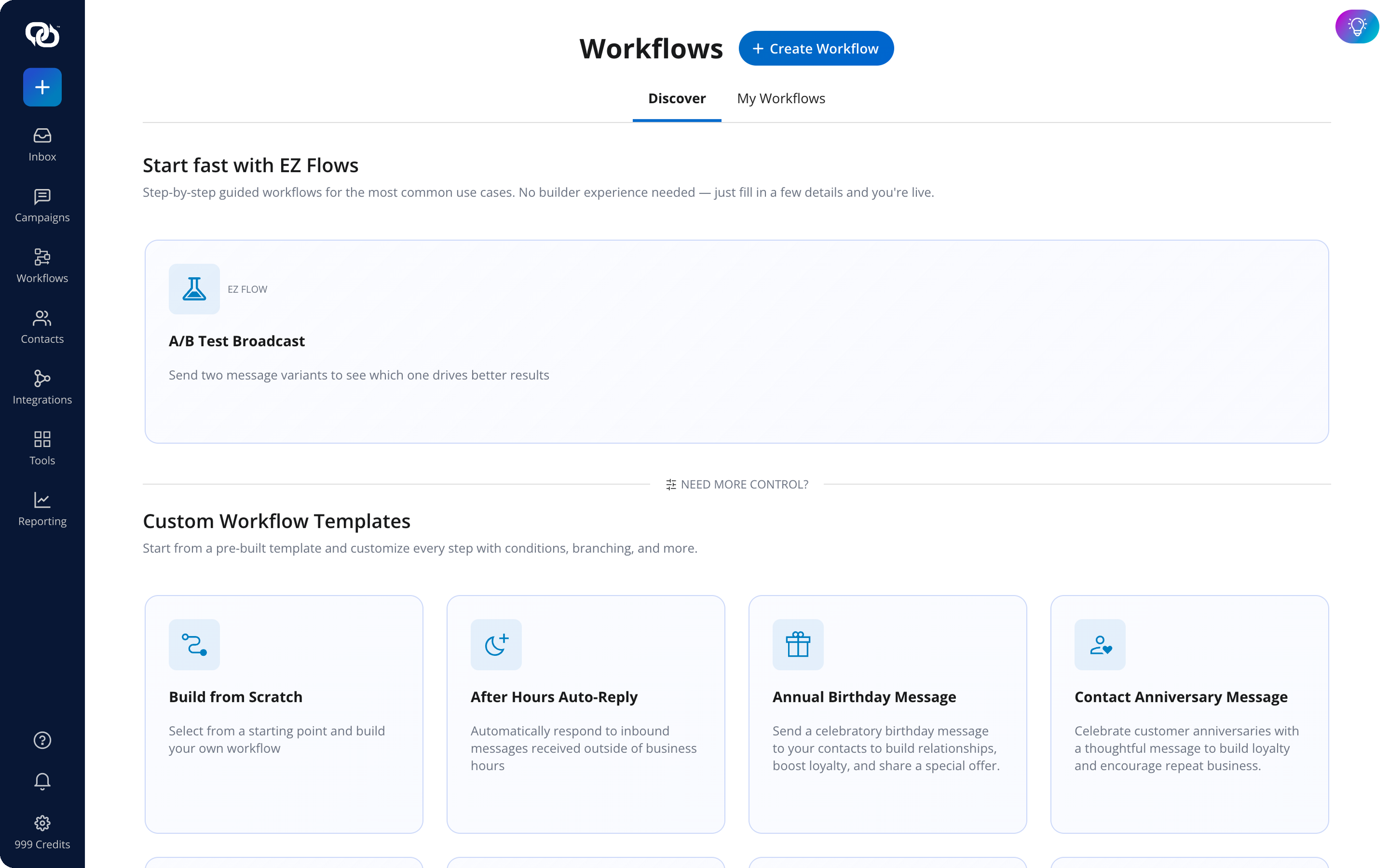
Cart recovery is a wise place to start so you can measure recovered revenue directly. As you expand, other SMS marketing automation strategies can help you apply triggers, delays, and branching to welcome messages, post-purchase follow-ups, and other points in the customer journey.
See other related to Features:
See other related to Use Cases:
See other related to Topics:
