SMS for Business: How to Use Text Messaging to Grow Engagement and Revenue
Key Takeaways
- SMS for business has become a reliable, high-visibility communication channel that allows you to reach customers directly on their mobile devices. It supports both marketing and operational messaging, making it a flexible tool for engagement and revenue growth.
- Businesses use SMS to deliver timely, relevant messages such as promotions, reminders, and updates. Because text messages are typically read within minutes, SMS offers a level of immediacy that complements email and other digital channels.
- As customer expectations shift toward faster and more convenient communication, SMS continues to play a larger role in how businesses connect, respond, and build ongoing relationships.
What Is SMS for Business?
Relationships are the foundation of all business. But in today’s often-disconnected society, how can your organization reach and stay top of mind with the people who drive your success? The answer is SMS marketing for business.
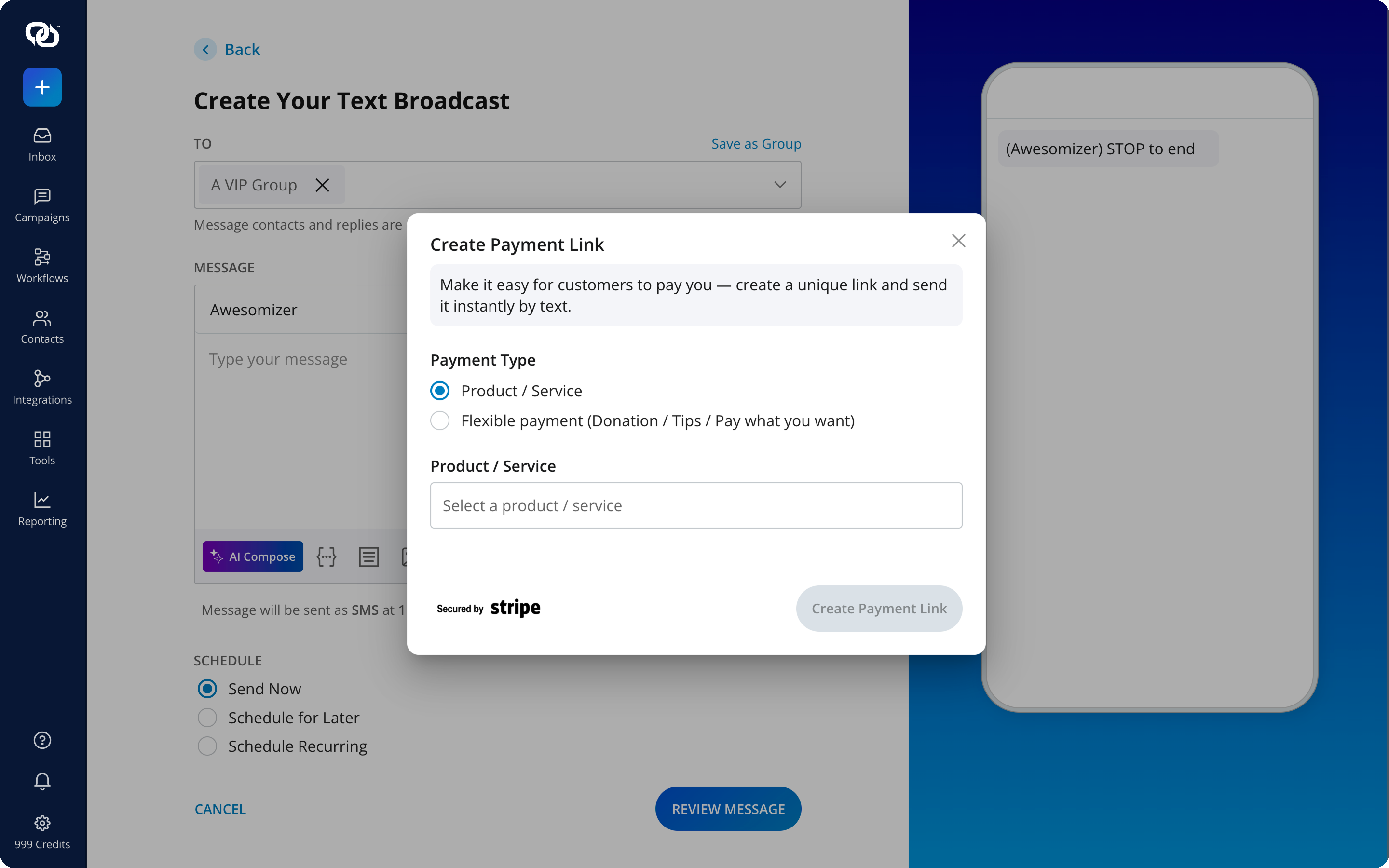
SMS for business gives you a direct, structured way to communicate with customers through text messaging, without relying on individual devices or manual outreach. Instead of one-to-one texting, you use a centralized platform that supports large contact lists, organized conversations, and coordinated team responses. This allows you to send announcements, run campaigns, and manage replies in a way that stays consistent and personal… even as your audience grows.
This makes SMS marketing for small businesses especially practical, as it provides a direct way to reach customers at scale without requiring large budgets or complex infrastructure. Messages might include promotions, reminders, or updates, while also giving customers the option to respond and start a conversation. MMS (multimedia messaging service) expands on this by adding images, links, and branded content, helping you present information more clearly. Overall, SMS marketing enjoys a 98% open rate, vastly outperforming other channels.
How Businesses Are Using SMS Marketing
Supporting a wide range of use cases across industries, SMS marketing is as versatile as it is effective (and cost-effective). At the same time, it can be effectively applied to internal coordination and team support just as easily as to customer outreach.
The following are some of the most impactful use cases of SMS for business:
Promotional Campaigns
Many businesses use SMS to send time-sensitive promotions that encourage immediate action. These may include:
- Sales alerts and discount codes
- Product launches and early access offers
- Limited-time promotions and flash sales
59% of consumers now respond to promotional texts (an 18% increase since 2023). And because of the immediacy of SMS, these messages are well-suited for campaigns where timing directly impacts performance.
Operational Messaging
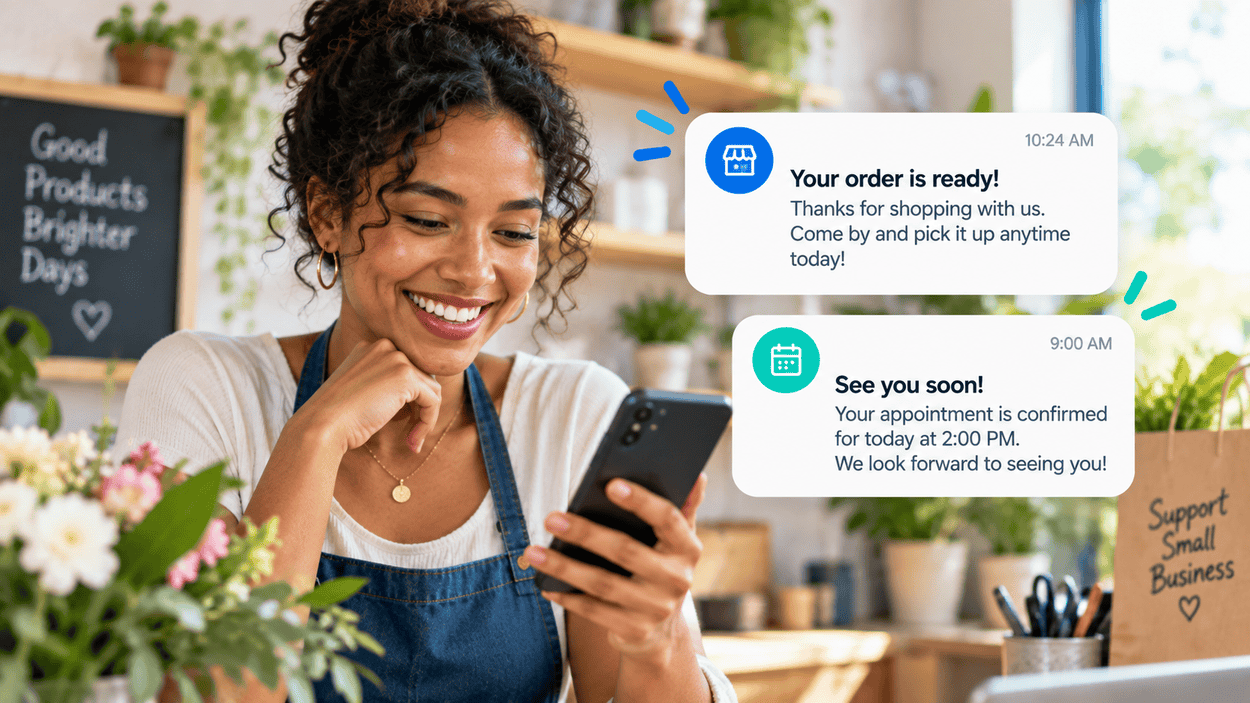
SMS also plays a critical role in day-to-day operations. You can use it to keep customers informed and reduce missed interactions. Common examples include:
- Appointment reminders and confirmations
- Order updates and delivery notifications
- Service alerts and schedule changes
Research shows that 63% of customers are texting more overall than in previous years, and 52% of customers are sending more texts to businesses. As such, SMS is more accepted and expected in operational messaging than it has ever been.
Customer Support and Conversations
Two-way SMS empowers your team to respond to customer questions in real time. Instead of relying solely on phone or email support, you can create conversational experiences through text.
This approach works well for:
- Answering product or service questions
- Resolving issues quickly
- Qualifying leads before a sale
Given that 57% of consumers expect a response from businesses within 15 minutes, this shift toward conversational messaging makes it possible to meet customers’ high expectations.
Internal Communication
Some organizations also use SMS for internal communication, particularly when speed is important. Examples include:
- Staff scheduling updates
- Emergency notifications
- Team-wide alerts
While not directly related to SMS marketing, SMS for employee communications is a growing application of SMS for business, allowing leaders and team members to connect using a channel they are naturally comfortable with and more likely to see and respond to.
Industry-Specific Applications
Different industries apply SMS in ways that reflect their operational needs:
- Retail: Promotions, loyalty programs, and back-in-stock alerts
- Healthcare: Appointment reminders, follow-ups, and patient notifications
- Education: Event announcements, attendance alerts, and administrative updates
- Nonprofits: Donation campaigns, volunteer coordination, and event outreach
Core Business SMS Solutions
To use SMS effectively, you need to understand the primary types of solutions available. Each serves a distinct purpose and can be combined with others to support a broader strategy.
Mass Text Messaging
Mass text messaging lets you send a single message to a large group of recipients at the same time. This is commonly used for:
- Promotions and marketing campaigns
- Announcements and updates
- Emergency alerts
Segmentation plays an important role here. By organizing your audience into smaller groups based on behavior, preferences, or demographics, you can send more relevant messages and improve engagement.
Two-Way Text Messaging
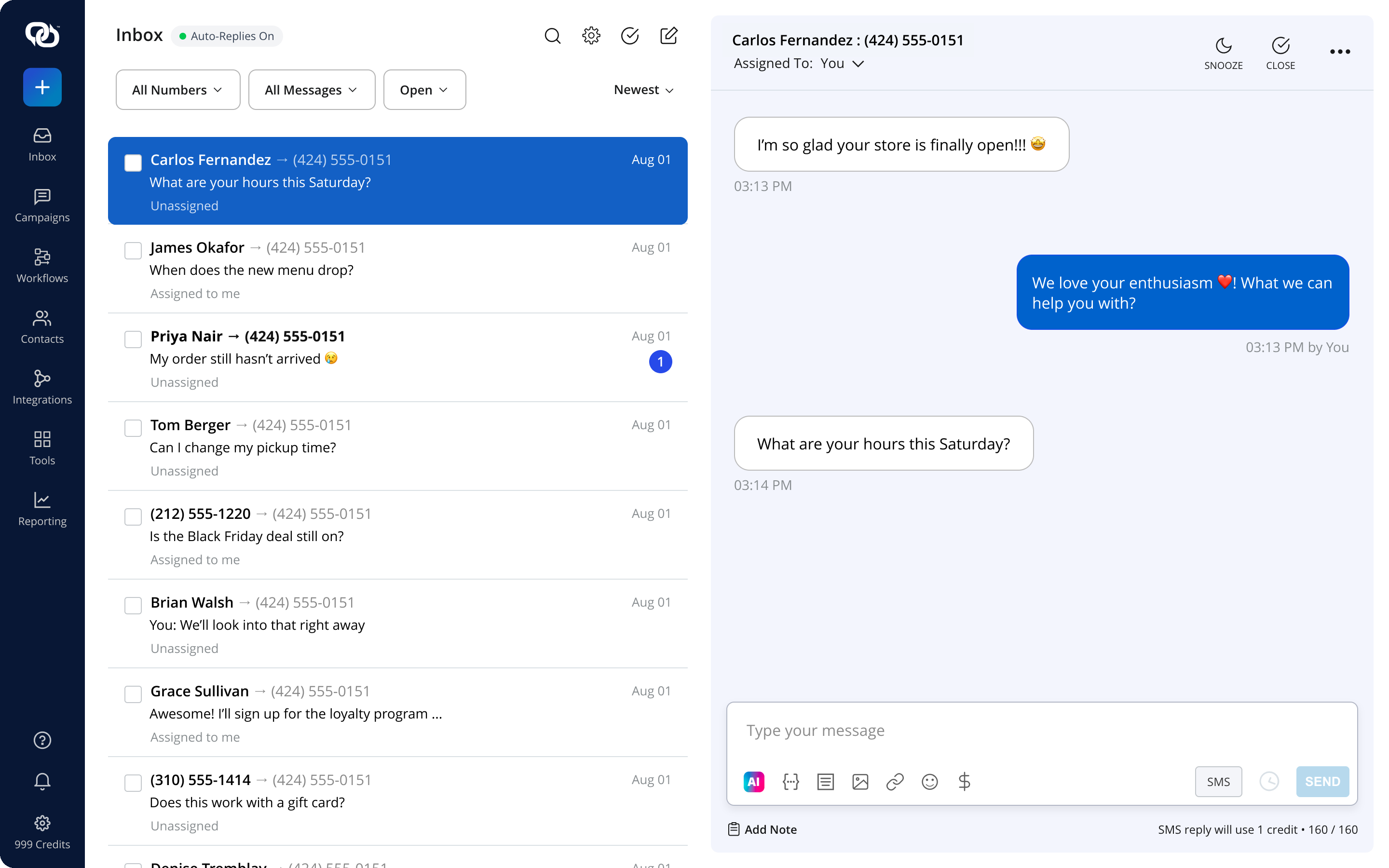
Two-way messaging enables real conversations between your business and your customers. Instead of broadcasting messages, you can create an interactive experience where recipients can respond and take part in ongoing conversations.
This approach supports:
- Faster customer support
- Lead qualification and follow-up
- Ongoing relationship building
Many platforms provide shared inboxes, which allow multiple team members to work together to manage conversations efficiently without losing context.
SMS Integrations
Integrations connect your SMS platform with other tools you already use, such as customer relationship management (CRM) systems, eCommerce platforms, and marketing automation software.
These connections help you:
- Sync contact data across systems
- Trigger messages based on user actions
- Track interactions and campaign performance
Integrating SMS into your existing workflows reduces manual work and maintains consistency across channels.
Key Features Your SMS Platform Should Offer
Text is not a new technology, and there is no shortage of business SMS providers eager to offer their services. As such, finding the right one to support your business can be a difficult process. As you consider your options, prioritize those that excel in the following capabilities:

Contact Management and Segmentation
A structured contact database organizes your audience so you can send targeted messages that go beyond generic. Segmentation helps you group contacts based on:
- Purchase behavior
- Engagement history
- Demographics or location
This ensures that your messages are relevant, making them that much more likely to encourage responses.
Automation and Workflows
Automation allows you to send messages based on predefined triggers or schedules. This reduces manual effort and ensures consistency. In fact, when it comes to appointment reminders, automation can reduce no-shows by more than 90%. Other examples include:
- Welcome messages after a customer opts in
- Drip campaigns that nurture leads over time
- Follow-up messages after a purchase or interaction
Scheduling and Campaign Planning
Scheduling tools allow you to plan messages in advance and send them at optimal times. This is especially useful for:
- Coordinating promotions across time zones
- Aligning messages with events or campaigns
- Maintaining consistent communication without manual oversight
Analytics and Reporting
Analytics provide insight into how your messages are performing. Key metrics typically include:
- Delivery rates
- Open and engagement rates
- Click-through rates
- Conversions
MMS and Rich Messaging Capabilities
As previously touched on, MMS enhances standard SMS by allowing you to include visual and interactive elements. And when you consider that adding multimedia to a text message can improve engagement rates by as much as 250%, it’s easy to see how MMS is taking SMS further.
Examples include:
- Product images and promotional graphics
- Event invitations with branded visuals
- Links to landing pages or resources
Benefits of SMS Marketing for Business Growth
Because messages are delivered to a device customers check frequently, SMS becomes a reliable and nonintrusive channel for both time-sensitive communication and ongoing relationship management.
When used consistently, SMS can support the full customer lifecycle, from initial engagement to repeat purchases, while also improving how your team manages communication at scale.
Improved Engagement and Response Rates
The vast majority of text messages are read within three minutes of being delivered, which increases the likelihood of immediate engagement. This makes SMS effective for time-sensitive communication and interactive campaigns.
Faster Communication
SMS provides a streamlined way to exchange information without the delays often associated with email or phone-based communication. Messages are short, direct, and easy to respond to, which reduces friction for both your team and your customers. This speed is particularly valuable in situations where timing affects outcomes, such as confirming appointments, resolving service issues, or answering pre-purchase questions. Faster communication can lead to quicker decisions and a smoother overall experience.
Stronger Customer Retention
Retention often depends on consistent and relevant communication. SMS keeps you connected with your audience through targeted messages that reflect their behavior, preferences, or past interactions. You can use SMS to:
- Send reminders and follow-ups
- Share personalized offers
- Re-engage inactive customers
Increased Revenue Opportunities
SMS creates opportunities to influence purchasing behavior by delivering messages at moments when customers are most likely to act. Common revenue-driving use cases include:
- Promote limited-time discounts
- Encourage repeat purchases
- Recover abandoned carts
Operational Efficiency
SMS can reduce the complexity of managing customer communication by centralizing messages and automating routine interactions. Instead of handling each message manually, your team can rely on workflows that trigger messages based on specific actions or timelines.
This approach allows you to:
- Manage higher volumes of communication without increasing workload
- Maintain consistency across messages and campaigns
- Reduce missed interactions through automated reminders and updates
Compliance and Best Practices for Business SMS
When a customer gives you text access to their personal device, it can be tempting to increase message frequency or expand beyond the original purpose of the opt-in. But doing so can quickly lead to opt-outs, complaints, or even costly and damaging regulatory violations. As such, using SMS responsibly is essential for maintaining trust and operating within the law. Compliance should be built into your messaging strategy from the start.
Follow Regulatory Guidelines
SMS messaging in the United States is governed by a combination of legal regulations and carrier-level requirements. The Telephone Consumer Protection Act (TCPA), which is enforced by the Federal Communications Commission, defines how businesses can contact consumers, including rules around consent, message timing, and recordkeeping.
In addition to federal law, mobile carriers follow guidelines set by the Cellular Telecommunications Industry Association (CTIA). These guidelines influence how messages are formatted, how campaigns are approved, and how spam is filtered.
Obtain Clear Opt-In Consent
Before sending any marketing text messages, you must obtain clear and documented consent from the recipient. As defined by the TCPA, this typically means obtaining prior express written consent, especially for promotional messaging sent through automated systems.
Consent should be intentional and transparent. Customers need to understand what they are signing up for, including the type of messages they will receive and how often they can expect them. Opt-in is typically accomplished through:
- Online forms
- Keyword-based sign-ups
- Point-of-sale opt-ins
Clear consent ensures that your audience expects and accepts your messages (and are much more likely to respond to them favorably).
Provide Easy Opt-Out Options
Every message you send must include a clear and accessible way for recipients to unsubscribe. This is a core requirement under the TCPA and is reinforced by CTIA guidelines. The most common approach is to allow users to reply with a standard keyword such as “STOP” to opt out of future messages. Once a user opts out, you are required to honor that request promptly and remove them from your messaging list.
Clear opt-out processes serve two purposes. They keep your program compliant, and they demonstrate that you respect customer preferences.
Maintain Message Relevance and Frequency
Compliance also relates to how your messages are perceived by your audience. Sending too many messages or content that lacks relevance can lead to opt-outs, complaints, or carrier filtering.
A structured approach helps maintain balance:
- Set clear expectations during the opt-in process
- Align message frequency with what was promised to the subscriber
- Focus on sending messages that provide clear, timely value
Relevance plays a direct role in both engagement and compliance. When messages match customer expectations, they are more likely to be received positively and less likely to be flagged as unwanted.
Use Platform-Based Compliance Tools
Maintaining compliance in the face of a shifting legal landscape can seem daunting, but you don’t have to do it alone. Most SMS platforms include built-in features to support compliance at scale. These capabilities are supported by:
- Automated opt-in tracking
- Opt-out management
- Message templates that follow regulatory guidelines
Investing in a platform with built-in compliance features helps ensure that regulations and standards are being maintained, even as your messaging volume grows.
Get Started with EZ Texting for SMS for Business
Relationships really are the foundation of all business, and with SMS marketing, you can build those relationships naturally. But it’s not something you should approach without the right tools, capabilities, or support.
EZ Texting is designed to empower businesses that want to launch messaging quickly while maintaining control over campaigns, conversations, and compliance. Providing tools for contact management, automation, segmentation, and reporting, EZ Texting’s best-in-class SMS marketing software manages marketing and operational messaging in one place.
Designed to fit any budget, EZ Texting SMS Marketing pricing provides a clear path to launch and scale without unnecessary complexity. Plans are structured to support businesses at different stages, whether you are starting with a small contact list or managing high-volume campaigns. This makes it easier to align your messaging strategy with your current needs while maintaining flexibility as your program grows.
If you’re still wondering how to choose an SMS provider, be aware that EZ Texting is built to cover the core requirements from the start. The platform combines strong deliverability, built-in compliance tools, flexible integrations, and an interface designed for quick adoption. This gives your team what it needs to move from setup to execution without the standard ramp-up period.
Ready to see how SMS can support your communication strategy? Start a free trial today, and see how EZ Texting can help you build the kinds of customer relationships that will define your business.
Frequently Asked Questions
SMS marketing for business is the use of text messaging to communicate with customers for both promotional and operational purposes. This includes sending offers, updates, reminders, and conversational messages that support engagement and service.
SMS marketing is often well-suited for small businesses because it is cost-effective and easy to implement. It makes it possible to reach customers directly, deliver messages when they are most likely to have an impact, and manage communication without working within overly complex systems.
Businesses stay compliant by obtaining clear opt-in consent, providing opt-out options, and following regulations such as TCPA guidelines. The best SMS platforms include tools that help manage consent and ensure messages meet legal requirements.
Businesses can send a variety of messages through SMS, including:
- Promotions and discounts
- Appointment reminders and confirmations
- Order and delivery updates
- Customer support responses
- Event announcements and alerts
These message types can be combined to create a comprehensive communication strategy that supports both engagement and operations.
See other resources related to: